Buys · 好物
Why the thermos became a personal object
Glass vacuum flasks stayed on the table. A 1990s stainless-steel copy is why hot water now follows you around.
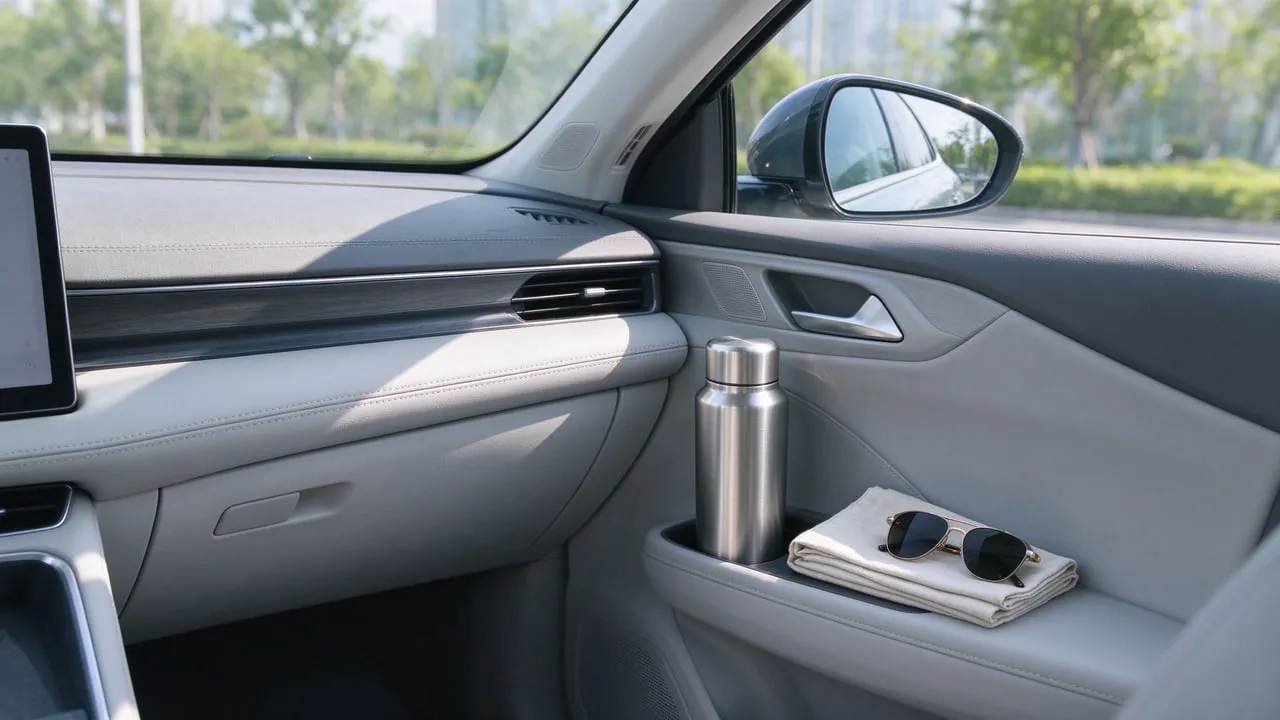
In a Chinese office, a desk is usually identifiable from across the room: a laptop, a mug, and a vacuum flask. The flask goes to meetings. It rides in the door pocket of a car, sits on the fold-down table of a train, and stands on the cabinet beside a hospital bed. Nobody comments on it. It is simply where hot water lives when it is away from a kettle.
The usual explanation
Outside China, the vacuum flask is usually filed as a European invention — James Dewar’s double-walled vessel of 1892 — and the Chinese habit of drinking hot water as something older than the flask itself. The first is true and explains very little; the second does not survive a date check. What made the flask personal was not where it was invented but when it got cheap, and that happened here, in the 1990s.
The flask that could not leave the table
For most of the twentieth century, the thing that kept water hot in China was the glass vacuum flask — the mirrored inner bottle with a cork or a screw cap. It was standard household equipment. A 1930s design with a carrying handle helped move it out of pharmacies and into ordinary homes, and by the early 1960s China was producing its own, under a state brand that factories handed to model workers as a reward.
Useful, but not portable in any real sense. Glass breaks. The flask was heavy, it lived on a shelf or a table, and it poured for a family rather than for a person. Hot water was something you came back to, not something you carried.
The stainless version, copied cheaply
The change came from outside first. In 1988 a Japanese manufacturer produced the first stainless-steel vacuum body, and the object it enabled was far better suited to being carried: metal does not shatter, and a double-walled vacuum holds heat for hours.
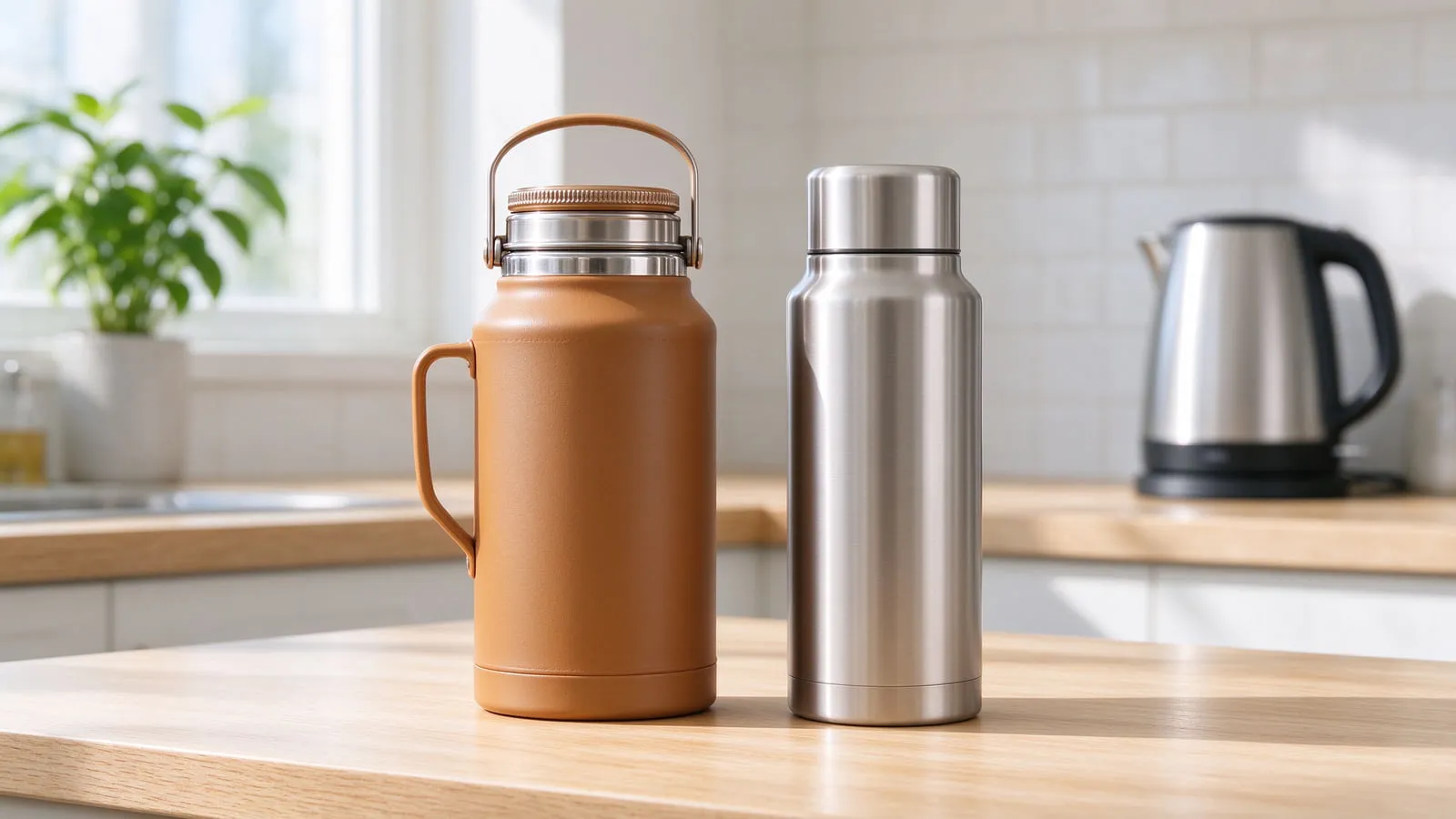
In China the technology arrived in two steps. Through the late 1980s, state-linked and military-linked factories experimented with stainless vacuum cups, but almost everything went for export; on the domestic market the cups were scarce and expensive. The second step was a private one. In 1993 an entrepreneur got hold of a Japanese stainless flask — sold at the time under the name “magic bottle” — took it apart with a university research lab, brought in a vacuum pump, and in 1994 produced the country’s first double-walled stainless flask. Within a year the price of a single unit fell from roughly 200 yuan to about half that, and the factories that copied it first were in a hardware-manufacturing town in eastern China that still makes most of the world’s supply.
The response was immediate and, at first, chaotic. Stainless flasks held heat far longer than the glass version, did not break, and had just become affordable, so demand outran supply through the second half of the 1990s. Within a few years more than a thousand factories and component suppliers were involved, and the boom overshot: some makers swapped stainless steel for a cheaper substitute, quality collapsed, and the first wave of the industry came apart around 1996. What survived was the export business, and the domestic brands later built on top of it.
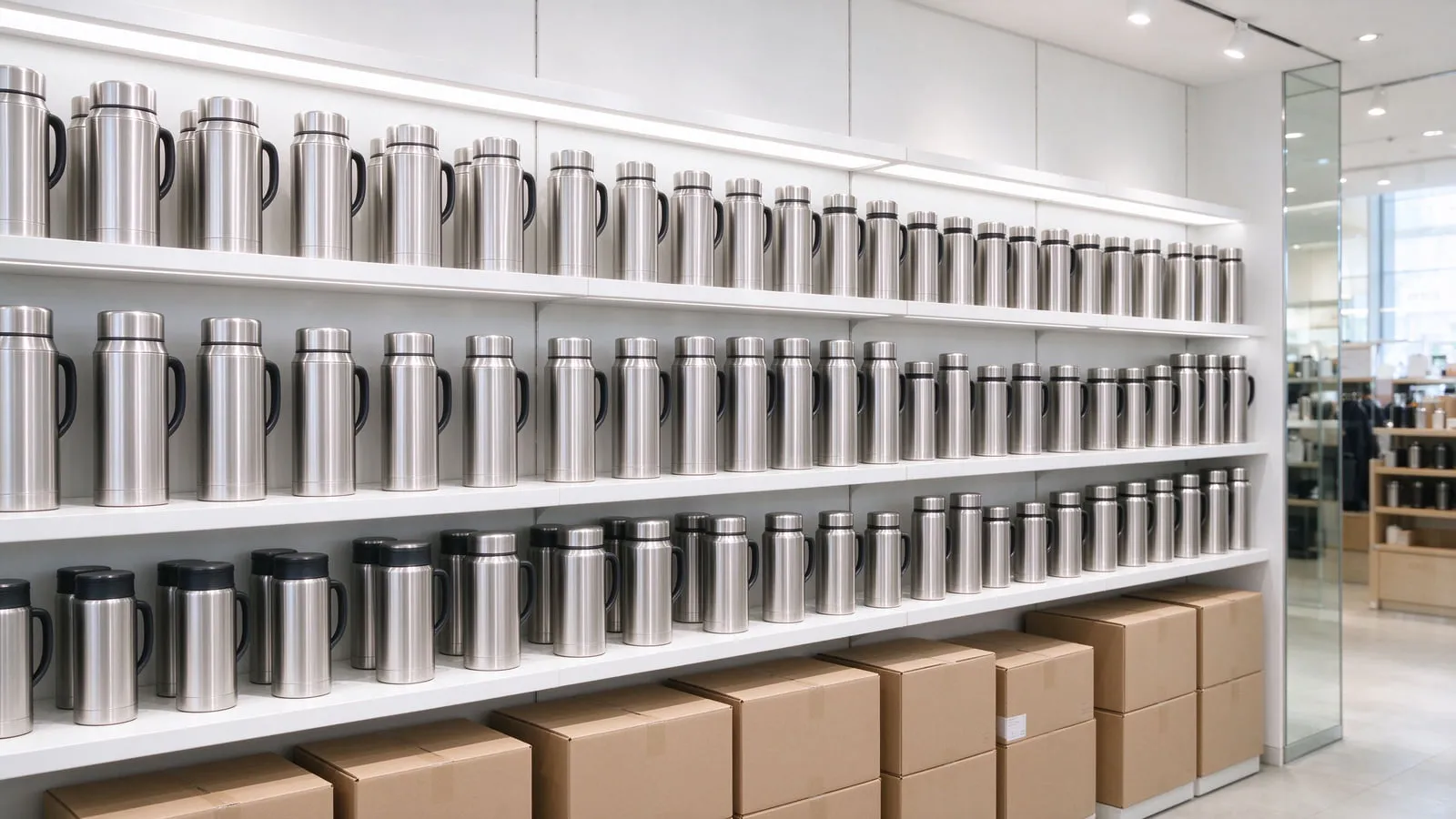
The scale that came out of that shakeout is why the object feels unavoidable now. China produces more than 60 percent of the world’s vacuum flasks — on the order of 800 million a year — and ships them to the same markets that once supplied the design.
What it means if you are visiting
The flask is the practical half of the hot-water habit covered in the piece on why hot water is the default drink. The public-health campaigns of the mid-twentieth century made boiled water the safe choice; the cheap stainless flask made that choice portable. One explains the drink, the other explains why it is in everyone’s hand.
So when a flask turns up on a desk, in a meeting room, or on a train table, it is not a claim about health. It is the cheapest durable way to keep a drink at temperature while moving, and it only became common here in the 1990s. More objects with this kind of story are collected under Buys, and the wider history of how household goods spread is filed under household objects.
Keep reading
 Wellness · 养生
 Why hot water is the default drink in China
Hot water became China's default drink in the twentieth century, not in antiquity. The dates that explain it are 1934, 1952 and 1985.
 CityLife · 城市
 Why cash stopped being the default in China
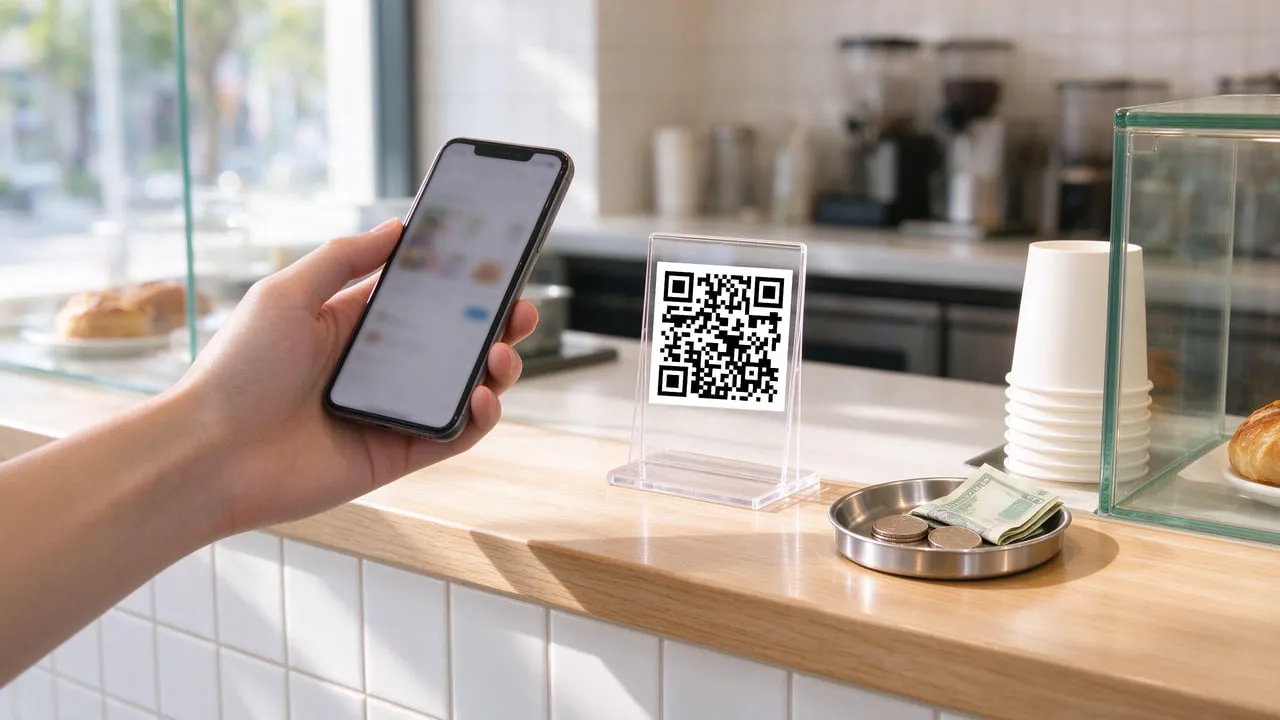
QR payment became the default in China between 2011 and 2013, then was halted by the central bank for two years before being formally recognized in 2016.
 Language · 语言
 Why Mandarin is called Putonghua
Mandarin is a Portuguese exonym that never came from Chinese; Putonghua was selected by name in 1955 and defined by the State Council in 1956.