CityLife · 城市
Why cash stopped being the default in China
Scanning a code to pay became normal in about two years, driven by a free 1994 patent and a race between two apps.
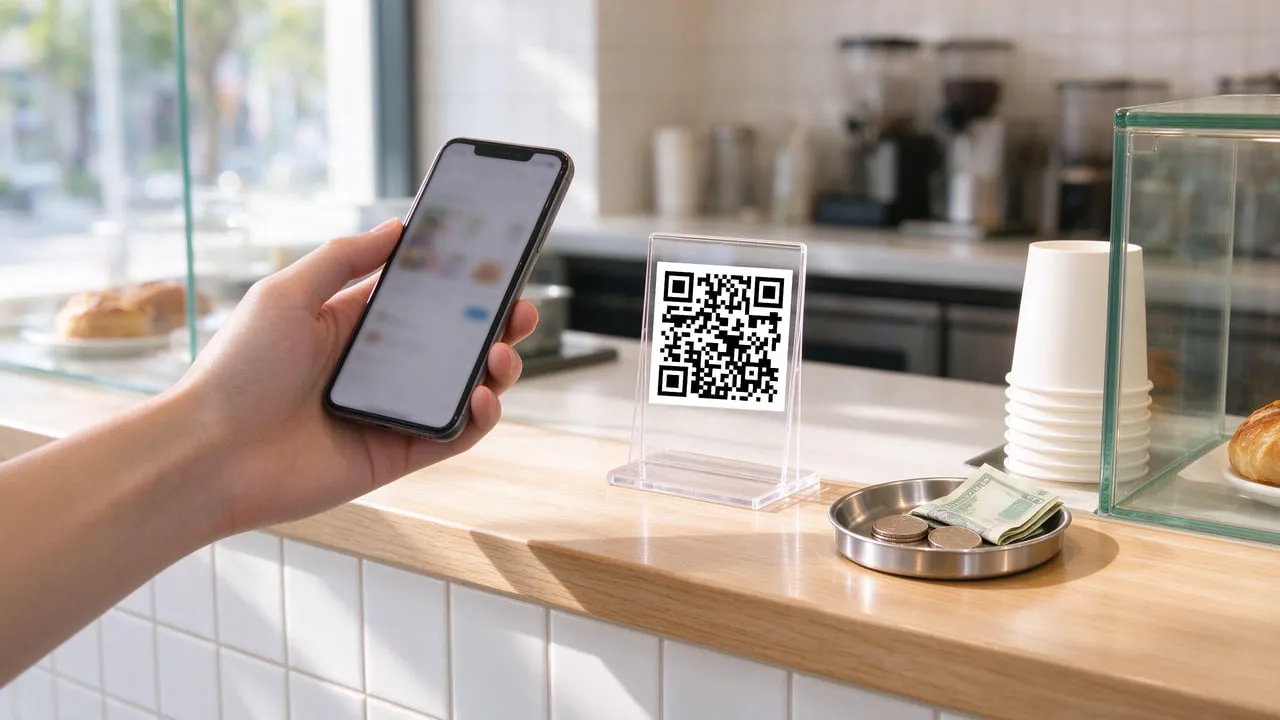
A convenience store at rush hour: a phone is held up, a scanner answers, a tone plays, the customer leaves. Two laminated squares are taped to the counter, one blue and one green, and a small sign beside the till carries both logos. Nobody in the queue finds any of this remarkable. Paying by phone is simply how you buy something here.
The counter with two codes
Look closer at the counter and the whole system is in those two pieces of paper. The buyer scans the merchant’s code, or the merchant scans the buyer’s — the two directions are different products with different risks, and both are ordinary. There is no terminal to sign, no PIN to enter, and no receipt unless you ask for one.
For a visitor arriving from a country where cards are the default, what is missing is the wallet. Not because cash is unavailable, but because reaching for it now marks you as the slower customer in the line.
An invention that was given away
The usual explanation for China’s cashless habit is that the country skipped plastic and jumped straight to phones, as though there had been no card culture to displace. A second assumption usually comes with it: that the shift was planned from the top, as a national push toward a cashless society. The record is narrower than both, and it begins with a code invented for car parts on a factory floor.
The QR code was developed in 1994 by DENSO WAVE, the applied-equipment arm of a Japanese automotive supplier, to track components on a factory floor. Its designers needed something a scanner could locate instantly and read through grease and scratches, and they settled on a pattern fixed at a 1:1:3:1:1 ratio in three corners of the square. The decision that made everything after it possible was commercial rather than technical: the patent was not enforced. Because the specification was published and free to use, airlines, phone makers and eventually payment companies could all build on it without negotiating a license.
For a decade the code stayed inside industry, plus the occasional marketing insert. What it lacked was a camera in every pocket.
Two apps, and two years of being blocked
That arrived with the smartphone, and in China the payment step happened quickly and from the private side.
On 1 July 2011, Alipay added QR payment to its mobile app, which marks the start of commercial code-based payment in the country. Two years later, on 5 August 2013, WeChat shipped version 5.0 with the same capability — and this is the release that made the habit ordinary. Alipay was an app people opened when they already intended to pay. WeChat was an app people already had open, dozens of times a day, for messages. Putting a payment button inside a screen that was already in the hand removed the last piece of friction.
The merchant side had its own arithmetic. Accepting a card meant posting a deposit for a terminal and paying a fee on every transaction, part of which went to the card network. Accepting a code meant printing one sheet of paper. For a small shop, that was not a marginal gain in convenience — it was the difference between having a card payment option and not having one.
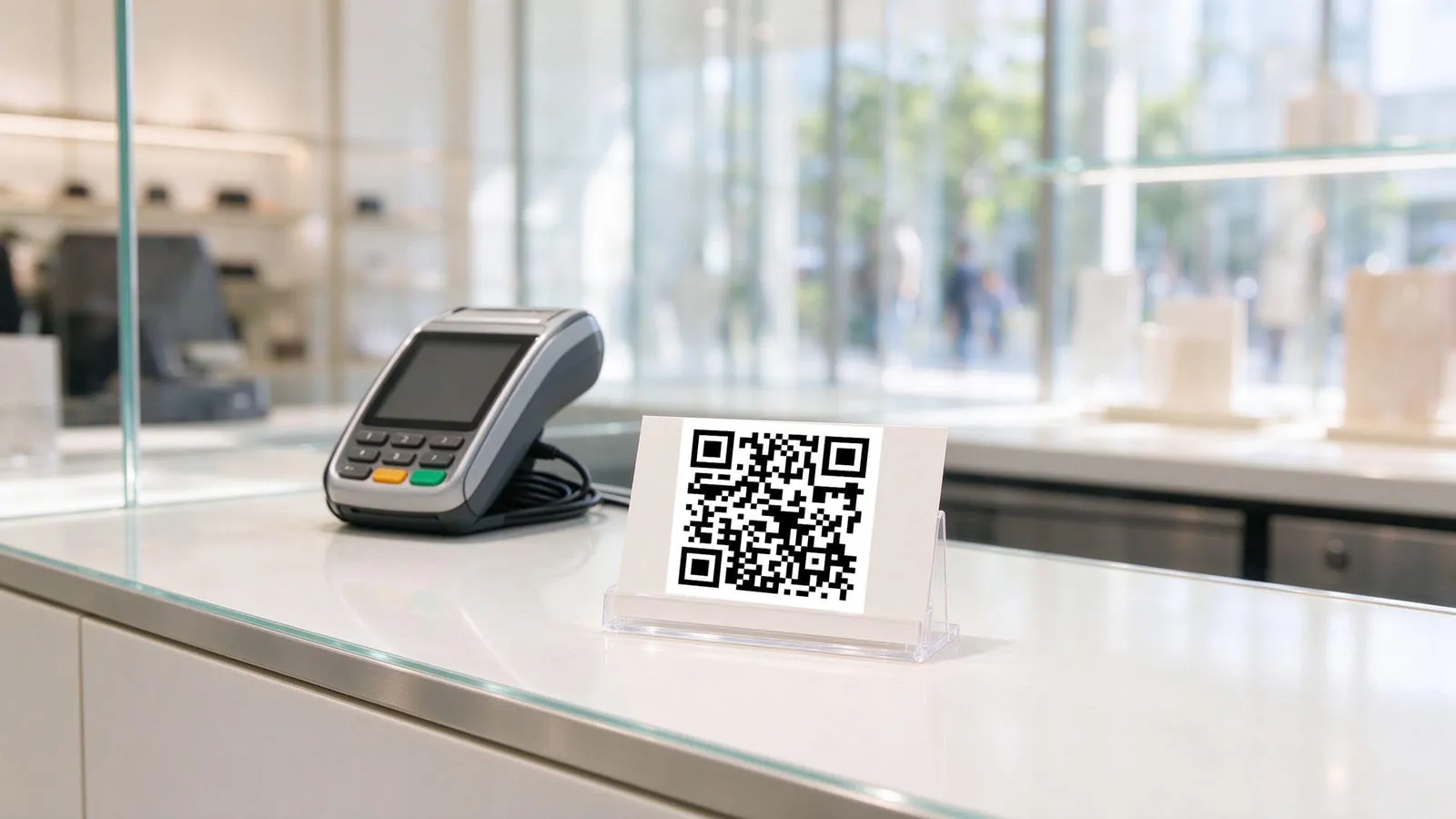
The two and a half years that followed are the part that rarely makes it into the story. On 13 March 2014 the central bank ordered offline QR payment to stop, on the grounds that the security and verification methods behind it had not been settled. The service did not vanish — the payment companies kept reworking the technical model — but it ran without formal standing. It was only on 3 August 2016, when the Payment & Clearing Association circulated a draft standard for barcode payment covering code expiry, transaction limits and verification, that the central bank recognized the method officially for the first time.
What happened after that is measurable. Between the first quarter of 2016 and the first quarter of 2019, offline code-based payment volume in China rose from 83 billion yuan to 7.38 trillion yuan, according to iResearch — a factor of roughly ninety in three years. A method that had spent its early years without a rulebook became the routine way to pay for a bottle of water.
What it means if you are visiting
One correction is worth carrying: cashless does not mean cash is not accepted. The renminbi is the legal tender of China, and refusing it is a violation rather than a shop’s policy choice — a point the central bank restated in a public announcement in December 2020, and again in rules published in 2025 that took effect in February 2026. Merchants who serve customers face to face are expected to take notes and coins, and to keep change on hand.
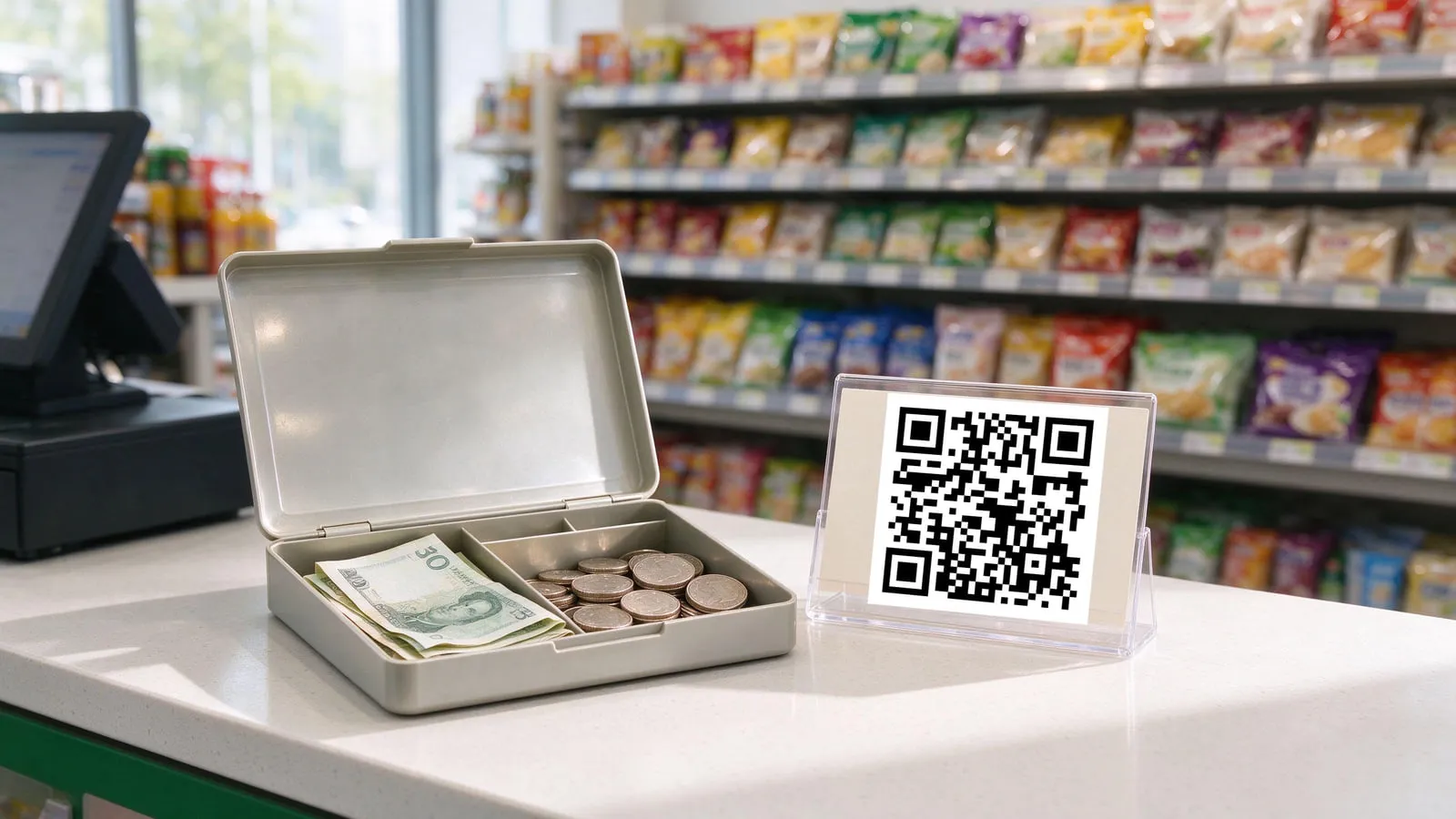
In practice, though, the assumption runs the other way. A street vendor may carry no float at all, and handing over a large note for a small purchase can be genuinely inconvenient for both of you. If you are staying more than a few days, the smoother path is a local payment app linked to your own card. If you are passing through, carry small notes rather than large ones.
The habit is younger than most visitors assume, and it was assembled out of a free patent, a camera phone and two competing apps. CityLife covers other routines that took shape this recently, the mobile payment tag collects the rest of this thread, and the wider pattern is filed under habit origins.
Keep reading
 Wellness · 养生
 Why hot water is the default drink in China
Hot water became China's default drink in the twentieth century, not in antiquity. The dates that explain it are 1934, 1952 and 1985.
 Buys · 好物
 Why the thermos became a personal object
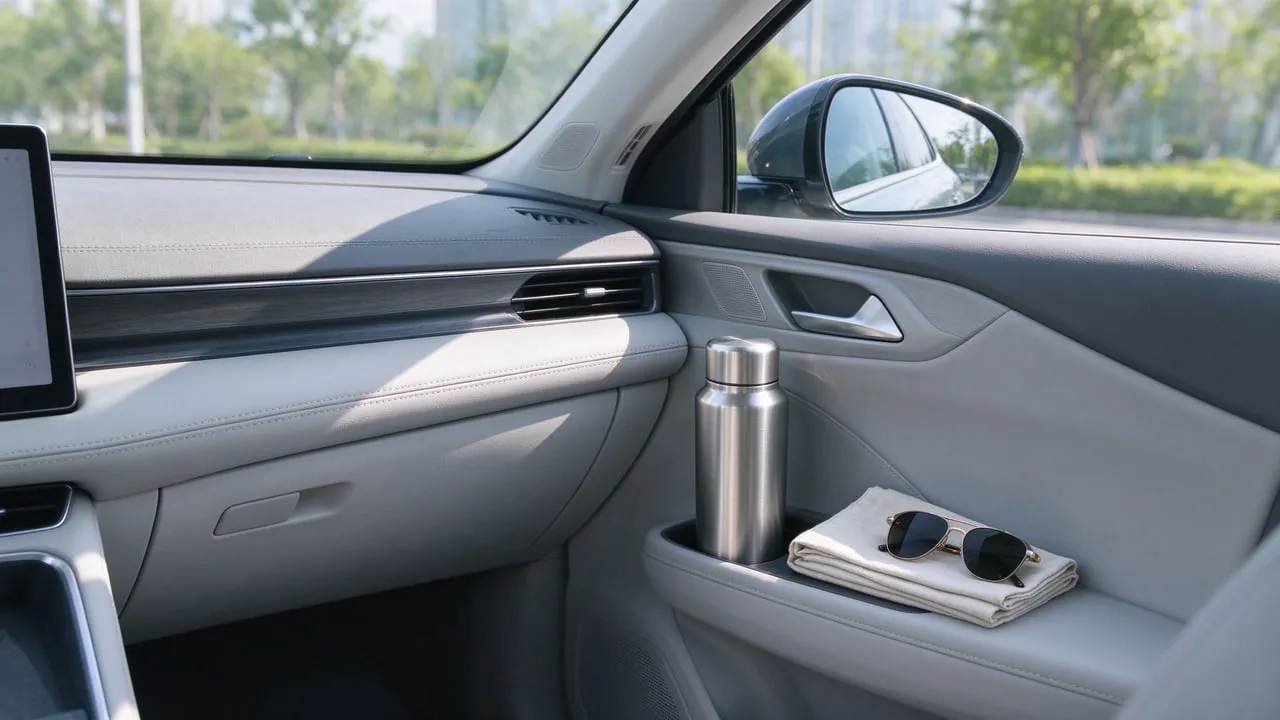
Hot water only became portable in the 1990s, once a stainless-steel vacuum flask could be made cheaply at home. Here is the object behind the habit.
 Language · 语言
 Why Mandarin is called Putonghua
Mandarin is a Portuguese exonym that never came from Chinese; Putonghua was selected by name in 1955 and defined by the State Council in 1956.