Wellness · 养生
Why hot water is the default drink in China
Not an ancient custom: a 1934 hygiene drive, a 1952 public-health campaign, and a thermos boom that made it portable.
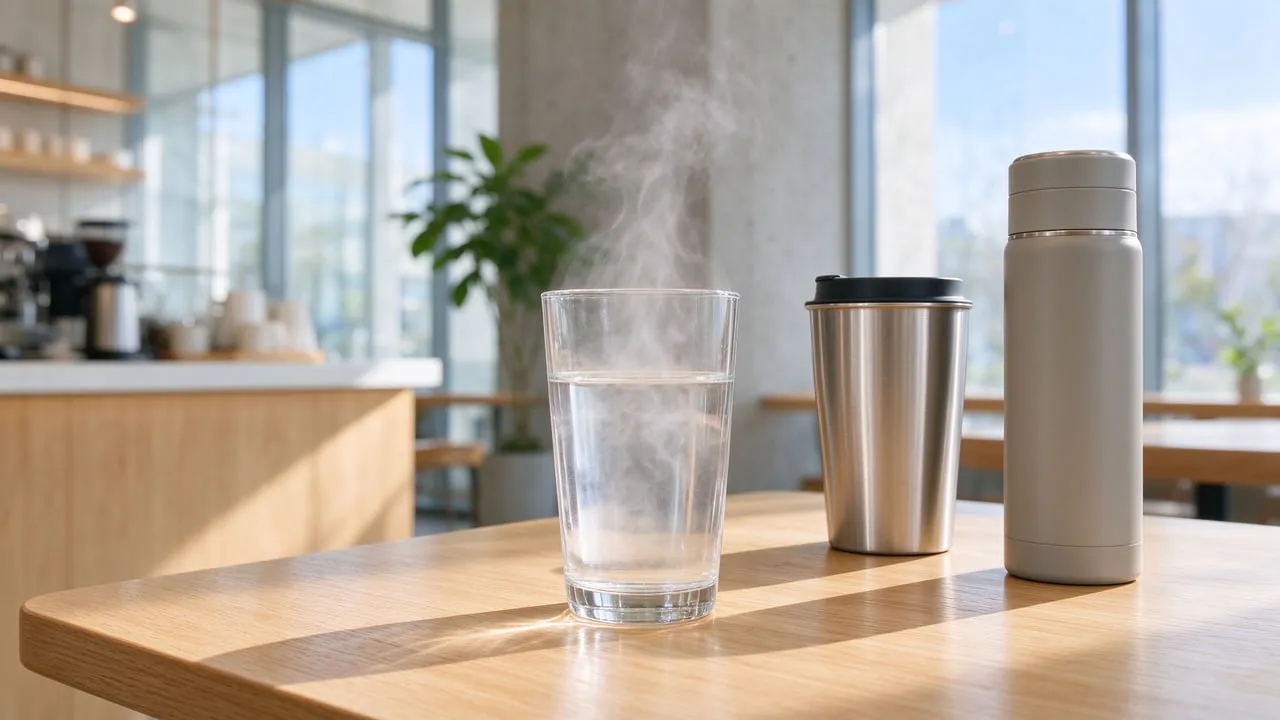
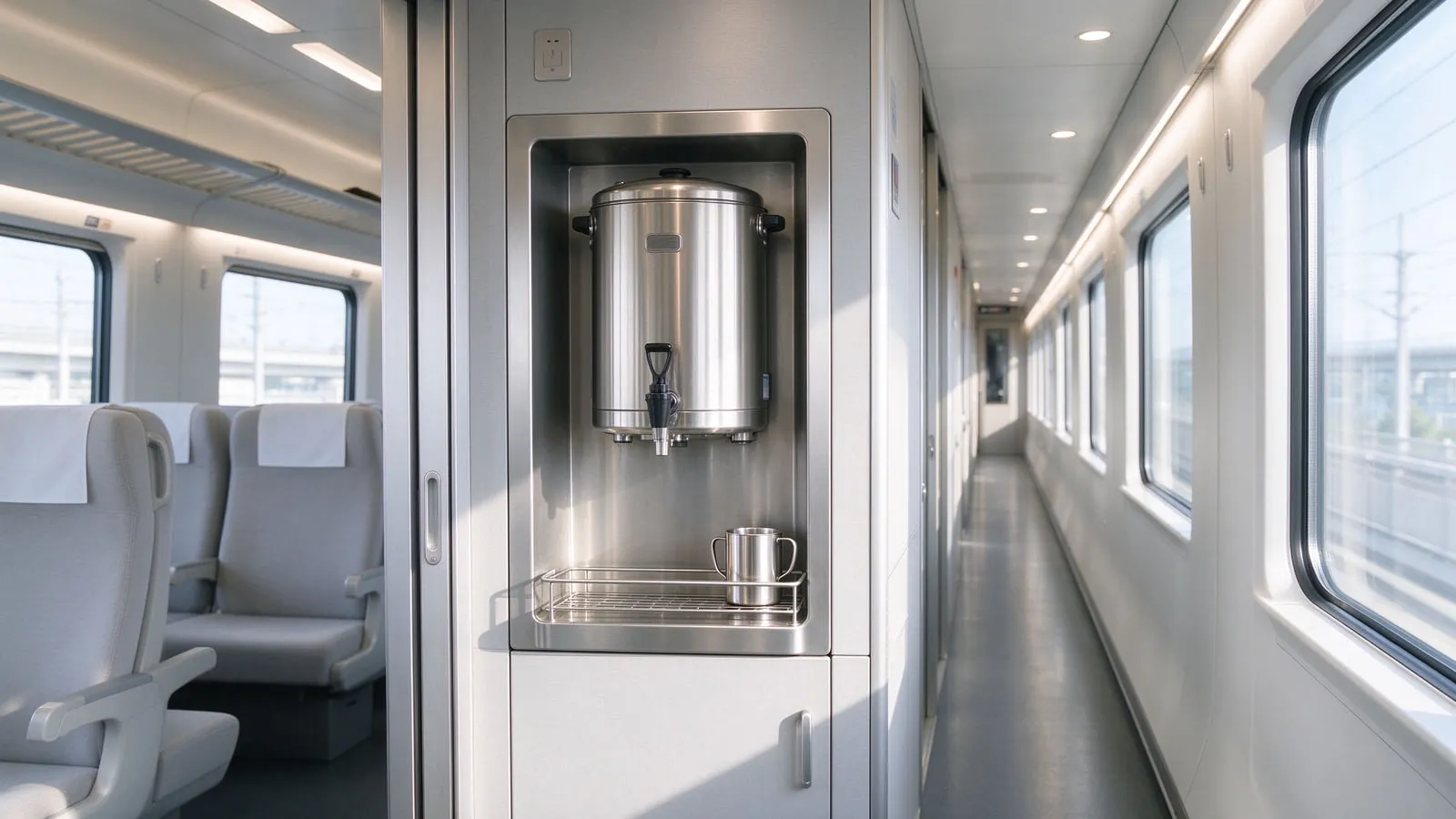
Ask for water in a Chinese restaurant and it arrives hot. Not warm, not room temperature — hot, in a glass or a small steel cup, usually without being ordered and usually without appearing on the bill. Offices keep a dispenser running all day. Hotel rooms put an electric kettle on the desk beside the instant noodles. A train carriage carries a boiler at one end and a short queue in front of it at most hours.
The habit sits deep enough that nobody here experiences it as a choice. Hot water is what arrives at a meeting before anyone has spoken, what a host pours for a guest in winter, what stands on the cabinet beside a hospital bed. It is simply what water is, when someone offers you some. Asking for it cold, in a room where nobody else did, is the thing that needs explaining.
The habit is younger than it looks
Outside China, hot water usually gets filed under ancient custom — the drinking end of a medical tradition that treats cold as a load the body has to carry. The second half of that is real, and older than the habit itself. The first half does not survive a date check: boiling drinking water as ordinary daily behaviour is a twentieth-century public-health project, and a recent one.
The earliest official instructions are specific. In 1920 the Beiyang epidemic prevention office in Beijing told residents to drink boiled water and to stop selling iced drinks made with untreated ice. In 1928 the Nationalist government’s Ministry of the Interior required cities to run regular sanitation campaigns, and in 1934 the New Life Movement — a programme of hygiene, order and public manners — put a rule about not drinking unboiled water alongside street cleaning and a ban on spitting.
None of it reached far into the countryside, and the obstacle was fuel. Boiling a household’s daily drinking water cost coal or wood that a poor family would rather spend on cooking, so the advice stayed urban and stayed aspirational. The American writer Graham Peck, reporting from China during the war, recorded a woodcutting couple in Sichuan who heated their water only at Spring Festival.
The instruction that actually spread
The version that took hold arrived after 1949, and it arrived as administration rather than persuasion. On 14 March 1952 the Government Administration Council set up a Central Epidemic Prevention Committee under Zhou Enlai, and the mass drive it ran became the patriotic health campaign. From the end of that year the committees were renamed and attached to every level of government, which is why the campaign outlasted the emergency that started it.
Boiled water was one of its standing rules, and the rule came with plumbing. Factories, government offices, schools and rural canteens were expected to supply boiled water at no charge. Schools asked pupils to bring an enamel mug to drink it from. A training guide for kindergarten staff in 1959 told them to give each child boiled water three times a day, and a 1959 handbook published by the People’s Medical Publishing House put “do not drink unboiled water” first on its list of five household rules.
The body model absorbed all of this without argument. The older idea — cold as something you accumulate, warmth as something you restore — already ran through foot soaking and the advice families pass down, and it treated a cup of hot water as the obvious corrective. The campaign did not have to win that argument. It only had to make the drink ordinary.
The flask, the price, and the standard
Hot water is useful only if it is still hot an hour later, which made the container as important as the kettle. Chinese light-industry output figures for vacuum flasks put production at about 30 million units in 1957, 138 million in 1983 and 266 million in 1997 — roughly two flasks for every person in the country in that final year, which was also the peak. In the middle of that run a flask was a standard wedding gift and a standard reward for a model worker, and local officials reported ownership rates upward as evidence of their health work. The stainless-steel version that made the object genuinely portable is a separate story, told in the piece on how the thermos became a personal object.
The last layer is regulatory, and it is part of why the habit has not faded. China’s first national drinking-water standard, GB 5749, was published in 1985 and covered 35 indicators. The revision that took effect on 1 July 2007 expanded that to 106, and the current version, GB 5749-2022, has been in force since 1 April 2023 with 97. Those figures govern water leaving a treatment plant rather than water arriving in a glass, and the household guidance that accompanies them has not changed: do not drink it unboiled, and keep it at a rolling boil for one to three minutes.
What it means if you are visiting
Two things this is not. It is not a health claim, and nothing here argues that cold water is harmful or that hot water does anything to a body. And it is not an ancient custom in the sense visitors usually mean. It is a sanitation instruction from the mid-twentieth century that outlived the water problem it was written for, and stayed because a flask and a kettle made it cheap to follow.
The practical version is small. In China hot water is the neutral choice — what arrives when nothing else is specified, the way iced water is the default in the United States. Asking for cold is not rude, though in a small restaurant it may come as a bottle you pay for, and ice is usually something you request rather than receive.
The wider pattern is collected under Wellness, the body model that absorbed the habit is filed under tcm shanghuo, and the campaign that pushed it into every household is covered by the public health campaign tag.
Keep reading
 Buys · 好物
 Why the thermos became a personal object
Hot water only became portable in the 1990s, once a stainless-steel vacuum flask could be made cheaply at home. Here is the object behind the habit.
 CityLife · 城市
 Why cash stopped being the default in China
QR payment became the default in China between 2011 and 2013, then was halted by the central bank for two years before being formally recognized in 2016.
 Language · 语言
 Why Mandarin is called Putonghua
Mandarin is a Portuguese exonym that never came from Chinese; Putonghua was selected by name in 1955 and defined by the State Council in 1956.