Language · 语言
Why Chinese uses pinyin
Sixty years of rival systems came first. A debate about which letters to use ended on 11 February 1958.
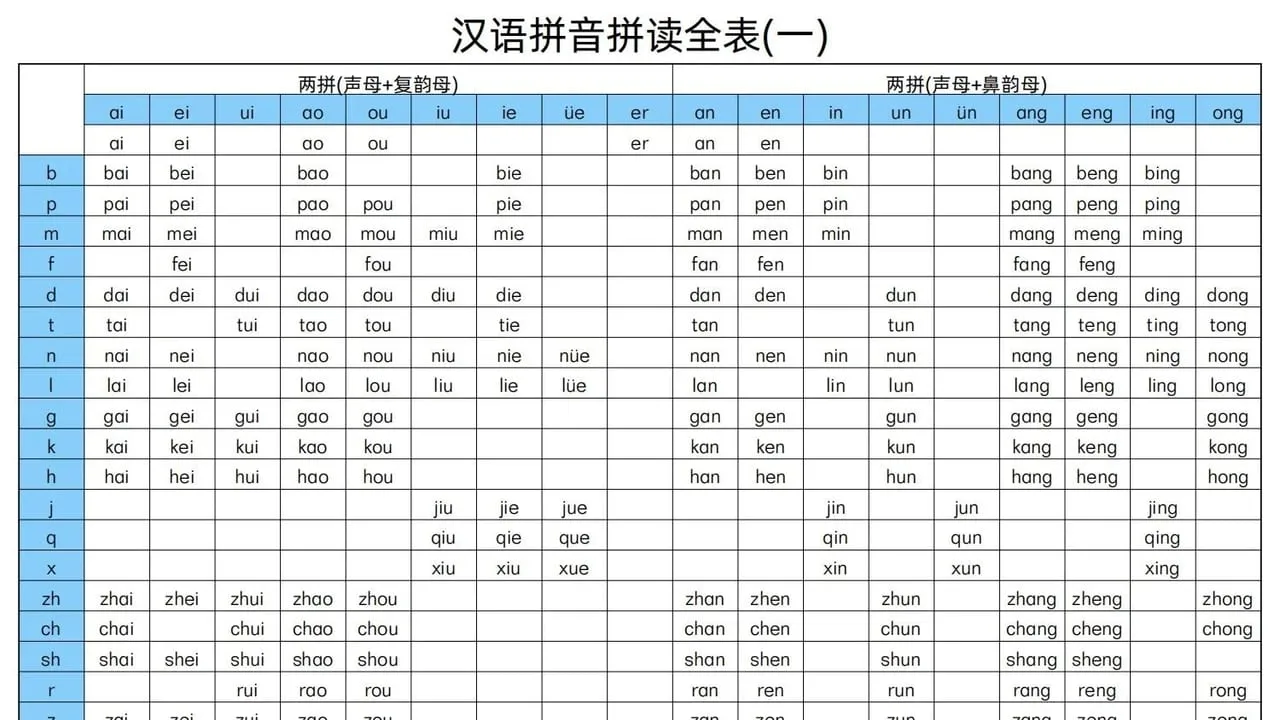
The short answer
- The approval date is exact. The national legislature adopted the scheme on 11 February 1958, after a debate that opened on 27 January and a report delivered on 3 February, and it came into teaching use in primary schools almost immediately.
- It beat sixty years of rivals, not a blank page. The first Chinese-designed romanisation appeared in 1892, and the four that mattered most were Mandarin Romanisation, the Northern Latinisation movement, the注音 symbols, and a scholar’s brush-stroke alphabet. Each had a following.
- The fight was about which letters, not whether. Voices for brush-stroke characters and for Cyrillic letters were strong in the early 1950s; a small group led by Zhou Youguang held out for Latin, and that position won.
The full history, the documents behind it, and the practical reading are below.
A road sign gives the place name twice. The larger line is a hundred years old or more, carved in strokes that a visitor cannot read. The smaller line underneath is set in twenty-six letters, and it can be pronounced by someone who has never heard the language spoken — not only read aloud correctly, but recognised as a sequence of sounds on sight.
That second line was not a natural development. It won an argument, and the argument took sixty years and involved at least four serious competitors.
The usual explanation
Two explanations get offered, and only one survives the record.
The first is utility: pinyin was invented because Chinese characters are hard to type, and the modern argument runs backwards from the input method. It does explain why the system is on every keyboard, but it cannot explain the timing. The scheme was adopted in 1958, decades before anyone needed it to type, and its original purpose was stated plainly at the time as teaching reading and writing, and unifying pronunciation.
The second explanation treats it as a natural consequence of simplification: having reduced the strokes in the characters, the country went on to reduce the characters themselves. That is a common pairing and it is wrong in sequence. Both measures belong to the same literacy programme of the mid-1950s, but pinyin was never intended to replace characters. The resolution that approved it said so in terms — it described pinyin as a tool for annotating characters and spreading the common language, not as a script in its own right, and it explicitly placed the question of whether Chinese should eventually become romanised outside the scope of current reform.
What made pinyin durable was neither typing nor simplification, and the reason sits in the sixty years of argument that preceded it rather than in anything the scheme does.
Sixty years of rivals
Chinese romanisation is old, and the oldest one here is not foreign.
The first scheme designed by a Chinese scholar appeared in 1892, and others followed through the following decades. Four of them mattered enough to leave a mark.
注音 symbols, adopted as the national standard in 1912, were shaped like Chinese strokes rather than like letters. They worked in schools, publishing, the railways and post, and they shaped roughly three generations of readers. In terms of simplicity they were better than the competing romanisations; in accuracy they were better than the other romanisation; and they remained in formal use for more than forty years.
国语罗马字, produced by a group including the linguists Li Jinxi and Zhao Yuanren, was a scholarly romanisation with a phonological analysis behind it.
北方拉丁化新文字, associated with Qu Qiubai and Wu Yuzhang, was the most politically committed of the three and gathered a real following in the 1930s.
Then there were the systems built for outsiders. Jesuit missionaries had produced a Latin-letter system in the late Ming and early Qing periods, an English official produced a trade romanisation in the nineteenth century, and an American linguist devised the Yale system for Chinese speakers at a university. All three were usable, and all three shared a defect: each was designed for someone else’s convenience, none had a unified standard of pronunciation behind it, and none aimed at matching the sound of the characters as spoken in China.
The existence of four domestic schemes that each had support, and each of which lost to the fifth, is the part that usually gets skipped.
The argument about letters
In the early 1950s the question stopped being what to romanise and became which alphabet to romanise with. Three positions had serious backing.
Brush-stroke characters were winning on argument at first, on the grounds that a system should look like the thing it describes. The Soviet Union advised using Cyrillic. A small group of experts, with Zhou Youguang the most prominent, argued for the Latin alphabet and held that position against considerable pressure for years.
The Latin position won. It won partly because Latin script was already what most of the world’s printed material used, which made it the cheaper choice for exchange, and partly because the scheme could be designed around sounds rather than around syllables.
The formal timetable is short and precisely recorded. A draft scheme had been out for two years of public discussion through the political consultative conference and its committees. On 10 January 1958 the premier presented a report on the current tasks of language reform, which set out three tasks: simplify characters, promote the common language, and establish and apply a pinyin scheme. On 27 January the legislature began debating the draft. A report on the reform work and on the scheme was delivered on 3 February. On 11 February 1958 the scheme was approved, together with a resolution setting out how it would be taught.
That resolution is worth reading for what it declines to do. It approves the scheme as a help for learning characters and spreading the common language. It says the scheme should first be taught in normal schools and secondary schools, gathering teaching experience, then extended gradually to publishing. And it records that the future of the characters themselves — whether to romanise them — is not a question the current reform programme takes up.
What it was for, and what it did
The purpose stated at the time was literacy, and the reasoning was specific.
The older methods of indicating pronunciation had a structural fault. Reading a syllable off a same-sounding character fails when a syllable has no common character, and reading it off a rare character is no help at all. A method that spliced two characters together to make a sound was accurate but very hard to learn. A professor of Chinese linguistics at Peking University made the point in these terms: you cannot annotate Chinese characters for a learner using Chinese characters, because a person who reads by their own dialect will not arrive at the standard pronunciation.
Pinyin solved that by writing sounds rather than characters. Its three stated characteristics were latinisation, phonemic spelling, and an orientation to spoken language — and the choice of the Latin alphabet was, in the assessment of the linguist Lü Shuxiang, the most important of them, because it kept the system close to international convention.
The literacy figures give the scale of what it was aimed at. At the founding of the country the illiteracy rate was around 80 per cent, and reading for a very large population was the task the scheme was designed against.
What it is not, and how to use it
Three things this account is not. It is not a claim that pinyin replaced the characters, which it did not and was never intended to: the resolution that approved it put romanising the characters themselves outside its scope, and the characters remain the writing system. It is not a claim that pinyin was invented for keyboards — it was approved for teaching, and the input-method argument is a later consequence. And it is not a claim that it was the first such system; at least four domestic schemes preceded it and lost.
For anyone learning to read, the practical consequence is small and immediate. Pinyin is a reading aid, and the character is still the word. Learning the system lets you look something up, work out how it sounds, and type it on a phone — which in practice is what most people use it for, often without knowing the scheme’s history at all.
What to be careful about is tone. The letters give a syllable; the tone, which changes what it means, is marked separately. A syllable written the same way can be several different words, and getting the tone right is the part that matters.
The wider pattern is collected under Language, the scheme under pinyin and pronunciation, and the decision it belonged to under language policy.
For the decision that named the language it pronounces, see why Mandarin is called Putonghua; for the other half of the same reform, why Chinese was simplified. For how the number of characters learners are expected to know was measured, read how many Chinese characters are enough to read.
Why it is being copied now (2026)
Nobody adopts a national romanisation to post about a trend, and this is not part of the Chinamaxxing phenomenon.
What is growing is the number of people who need to read rather than speak. Inbound travel reached 22.91 million visitors in the first half of 2026, up 20.4 per cent, with 77.7 per cent arriving visa-free under arrangements covering 50 countries, and the audience includes a much larger overseas learner population than existed five years ago. That audience learns the characters, and the characters come with a romanisation they will use before they can write a single word.
Two other trends pushed pinyin outward as well. It became the international standard for writing Chinese place names in the late 1970s, and was then extended to Chinese personal names, place names and Chinese-language texts, which is a much wider claim than a romanisation normally gets.
The 2018 sixtieth anniversary was marked publicly, which is unusual for a technical standard and tells you how the government treats it. Most writing systems in a country’s history are not legislated in a single afternoon by a vote.
Common questions
When was pinyin adopted?
On 11 February 1958, approved by the national legislature and published, with the resolution stating that it would first be taught in normal and secondary schools before being extended to publishing. The debate in the legislature began on 27 January, and the preceding draft had been under public discussion for about two years.
Why not just use English-style romanisation?
Several systems built for foreigners already existed, including ones from Jesuit missionaries in the late Ming and early Qing periods, an English trade romanisation from the nineteenth century, and the Yale system. Each was usable, but none had a unified standard of pronunciation behind it, none aimed at matching how the characters are actually read, and each was made for someone else’s convenience rather than for speakers of the language.
Did China ever plan to replace characters with letters?
No. The resolution that approved pinyin in 1958 stated that pinyin was a tool for annotating characters and spreading the common language, not a replacement for them, and it explicitly placed the question of whether Chinese should eventually be romanised outside the current reform programme. The characters remain the writing system.
What about tones?
They are marked separately from the letters, and they change the meaning rather than the pronunciation of the syllable. The letters give a syllable; a syllable written identically can be several different words depending on tone, which is why getting the tone right matters more than the letters do.
Is pinyin used outside China?
Yes, and that is partly official rather than incidental. It became the international standard for writing Chinese place names in the late 1970s, and was later extended to Chinese personal names, place names and Chinese-language texts. It is also on most keyboards and phones regardless of where they are made.
The documents behind this
- The resolution of the first session of the national legislature, fifth meeting, passed on 11 February 1958, approving the scheme and setting out that it would first be taught in normal and secondary schools, with publishing to follow gradually.
- The report on the current tasks of language reform delivered on 10 January 1958, which set out three tasks: simplifying characters, promoting the common language, and establishing and applying a pinyin scheme.
- The debate in the legislature opening on 27 January 1958, with the report on reform work and the scheme delivered on 3 February.
- Illiteracy figures from the early 1950s, putting the rate at around 80 per cent at the time the literacy programme was set up.
Where this goes next
The Language section covers the decisions that put the language on its current footing. The scheme itself is filed under pinyin, pronunciation and language policy, and the characters it annotates under chinese characters.
For the decision that named the language, read why Mandarin is called Putonghua; for the other measure of the same reform, why Chinese was simplified; and for the number of characters that makes reading possible, how many Chinese characters are enough to read. For why a standard legislated in an afternoon can still be argued about, see why these habits look older than they are.
Written and checked against published sources. See how we work
Keep reading
 Language · 语言
How many Chinese characters are enough to read
A 1988 list fixed 3,500 characters as the working core of written Chinese. The number came from computer sampling, not from a tradition handed down.
 Language · 语言
Why Mandarin is called Putonghua
Mandarin is a Portuguese word for officials, not a Chinese one. Putonghua was adopted in October 1955 and defined by the State Council on 6 February 1956.
 Language · 语言
Why Chinese was simplified
Chinese characters were simplified in 1956 to cut stroke counts, as literacy campaigns pushed reading. In 2013 a programme began adding old forms back to signs.