Food · 中国味
Why you order by scanning the table
A code on the table opens the menu. It is QR payment from 2011 reaching the restaurant, not a way to serve.
The short answer
- It is not a restaurant invention. The code came from the till: Alipay added QR payment on 1 July 2011, and WeChat shipped the same capability in August 2013.
- It waited years for a rulebook. Barcode payment was formally recognised only on 3 August 2016, once code expiry, transaction limits and verification were settled.
- The table version is post-2017. Platform restaurant toolkits arrived in November 2017, and the contactless reopening of 2020 is what made the code ordinary.
The full history, the documents behind it, and the practical reading are below.
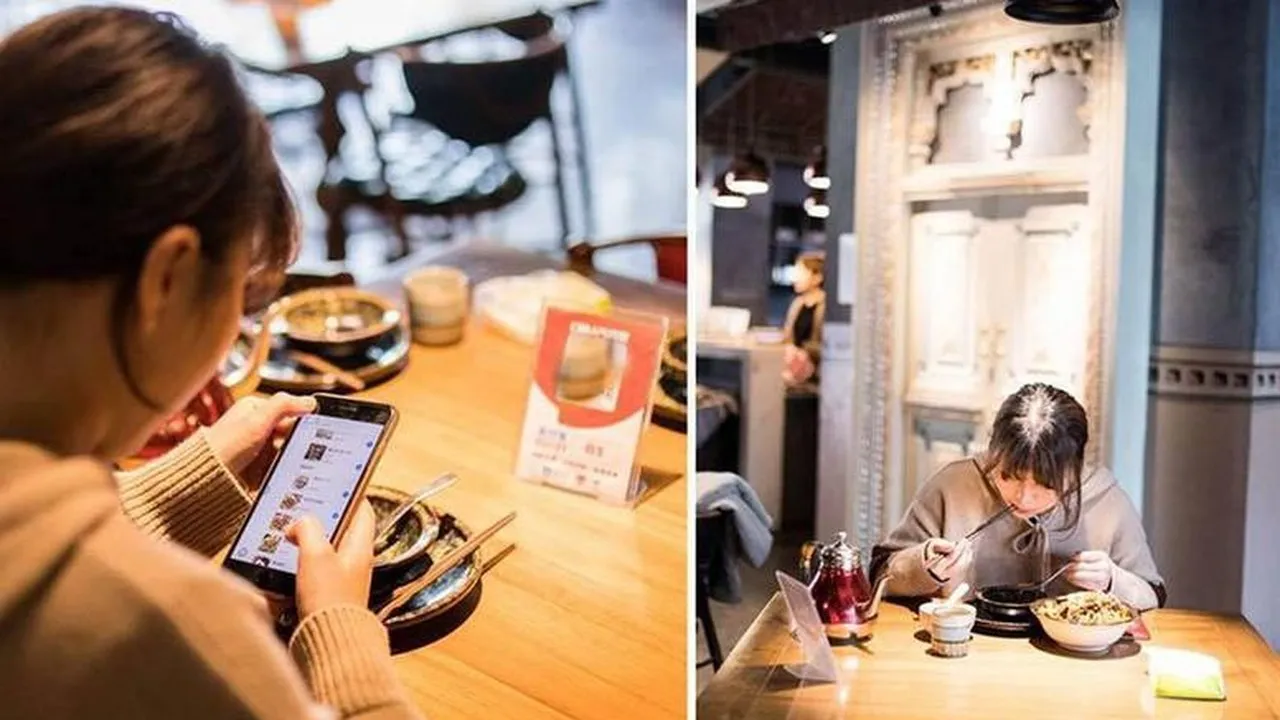
A square code is fixed to the corner of the table, under a clear plastic cover. A diner points a phone at it, a menu opens, and the dishes are chosen and paid for before anything arrives. The plates come out one at a time, carried by a person, set down, and the meal goes on. Nothing about the food changed with the code. What changed is where the order is taken: not at the table by a waiter with a pad, but on the customer’s own screen, before the kitchen hears about it.
The usual explanation
Outside China, the table code is usually filed as a local efficiency trick, or as a service that has been withdrawn — somewhere a waiter should be standing. Neither fits the record, because the mechanism did not start in restaurants. The code on the table is the code from the till. It arrived with the payment system, years before anyone scanned a menu, and it explains the ordering step only because it was already there.
The code arrives at the till
The code reached shops before tables. On 1 July 2011 Alipay added QR payment to its mobile app, and two years later, in August 2013, WeChat shipped a version that put the same capability inside an app people already opened dozens of times a day. The merchant side was the part that travelled. Accepting a card meant a terminal and a fee on every sale; accepting a code meant printing one square of paper. For a small restaurant the second was not a cheaper version of the first. It was the difference between having a way to take payment and not having one. The two apps then competed for the same small shops, and a merchant who adopted either usually adopted the printed square rather than a terminal. By 2016 the square was an ordinary thing to find on a counter, in a stall and at a table in a place that sold tea.
The merchant-side arithmetic that put a printed square on a small shop’s counter — no terminal to install, no fee on every sale — is set out in full in why cash stopped being the default.
A rulebook for the square
Payment by a printed code ran for years before it had a settled rule. It was only on 3 August 2016 that the payment and clearing association circulated a draft standard for barcode payment, covering code expiry, transaction limits and verification, and the method was recognised formally for the first time. Those three clauses are also what a table code needs. A code that never expires can be photographed and reused; a code with no limit can be abused from a distance; a code with no verification cannot prove who paid. The rules that made a shop’s code safe are the same rules that would later let the code leave the counter and sit on a table. A settled standard also let the tools scale. A restaurant could rely on the method without building its own, which is what let a two-person shop run a menu, an order and a bill from one square of paper.
The same 2016 standard is what later let the code leave the counter and run an entire day, which is traced in why one app runs the whole day.
The code moves to the table
Once the square could be trusted, moving it to the table was a short step, and it happened over a period rather than on a date. Platform companies then opened restaurant tools that let a small shop run a menu and an order from a code, and the delivery apps competed to place the same tools in the same shops. In November 2017 one platform opened a “smart restaurant” toolkit aimed at exactly this, putting a menu, an order and a payment behind a single code; the delivery and local-services apps answered with their own. The table was where those two lines met — the till, which had moved first, and the menu, which had never moved at all. The step that fixed it in place came at the end of the decade. In December 2020 the central bank restated that refusing cash is a violation, a reminder that a shop’s payment methods are a matter of rule rather than preference. In the same months the contactless reopening of restaurants made a table code ordinary. The two shifts are the same one seen from two sides: a payment method that belonged to the till became a way to run the table.
The visitor-side half of the same mechanism — an overseas card inside a Chinese payment app — is covered in why a foreign card now works on a Chinese phone.
What it is not, and how to use it
This is not a set of instructions and it is not a guide to which restaurants to choose. It is not a claim that service disappeared: the dishes are still carried out by a person, cleared by a person and cooked by a person, and plenty of restaurants still take the order by hand. And it is not a claim that everyone uses the code — a diner without a phone, or without the app, can still ask for a menu and order the old way.
What the efficiency story cannot explain is the part that never moved. If a table code had replaced service, the food would arrive without anyone in the loop. It does not. The code took one step of the process, the taking of the order, and left the rest where it was: a person still walks each dish to the table and takes each plate away. The reading of the meal as “self-service” gets the surface right and the mechanism wrong. One step was moved; the shape of the meal was not.
For a visitor the reading is simple. A code at the table is an option, not a requirement, and where one is offered it saves the wait to catch someone’s eye; where it is not, ordering is unchanged. The Food section covers what a Chinese table assumes, the mechanism is filed under mobile payment, the ordering half is under self-service ordering, the general thread is habit origins, the same shift at the counter is told in why cash stopped being the default, and the app that carries it is explained in why one app runs the whole day.
Why it is being copied now (2026)
Since late 2025 the printed square has been among the things visitors film and copy most, under a trend its own participants call Chinamaxxing — China plus the online suffix -maxxing. Hashtags including #Chinamaxxing and #BecomingChinese had passed four billion cumulative views by mid-2026, and the #ChinaTravel tag passed 28 billion plays.
The traffic behind the trend is measurable. China received 22.9 million inbound foreign visitors in the first half of 2026, up 20.4 per cent on a year earlier, and 77.7 per cent of them arrived visa-free. A code taped to a table is one of the first things that group meets.
The habit is not being copied because it is old. It is fourteen years younger than the payment release that created it, and the visitors photographing it are older than the mechanism.
Common questions
Do I have to scan a code to eat in a Chinese restaurant?
No. Plenty of restaurants still take the order by hand, and a diner without a phone or without the app can ask for a paper menu. Where a code is offered it is an option rather than a requirement. The 2011 code at the till and the 2017 toolkit behind the table changed where the order is taken, not who carries the food.
Has the table code replaced waiters?
No. The code took one step of the process — the taking of the order — and left the rest where it was: a person still walks each dish to the table and takes each plate away. The toolkit behind the table arrived in November 2017, and a waiter still carries the food. That is why the ‘self-service’ reading gets the surface right and the mechanism wrong.
Can I use a table code without a Chinese phone number?
Usually yes, and where you cannot, staff will take the order directly. Since July 2023 overseas cards have been linkable to Alipay and WeChat Pay, and the 2024 raise took the single-payment limit to $5,000. A code at the table is the same payment system, one step further into the meal.
When did paying by code become normal in China?
Between the first quarter of 2016 and the first quarter of 2019, offline code-based payment volume rose from 83 billion yuan to 7.38 trillion yuan, according to iResearch — roughly ninety times in three years. The table followed the counter, not the other way round.
The documents behind this
- Alipay’s QR payment release, 1 July 2011 — the first commercial code-based payment in the country.
- WeChat version 5.0, August 2013 — the release that put the same capability inside an app people already had open.
- The barcode payment draft standard circulated by the Payment & Clearing Association on 3 August 2016, covering code expiry, transaction limits and verification.
- The central bank’s restatement of December 2020 that refusing cash is a violation — the rule that sits behind a shop’s choice of payment methods.
Where this goes next
The Food section covers the arrangements at a Chinese table; the payment mechanism behind the code is filed under mobile payment, the ordering step under self-service ordering, and the trend this habit now travels on under chinamaxxing.
If you are preparing a trip rather than reading for curiosity, the two companion pieces are why a foreign card now works on a Chinese phone and why cash stopped being the default. The same code at a drink counter, where the wait moves to the front of the shop, is in why milk tea has a queue. The pattern this site writes to — that an ordinary habit in China usually has a documentable date — is set out in why these habits look older than they are.
Written and checked against published sources. See how we work
Keep reading
 CityLife · 城市
Why one app runs the whole day
The app launched in 2011 as a messenger. Payment arrived in 2013 and mini programs in 2017; by 2024 it reported roughly 1.4 billion monthly users.
 CityLife · 城市
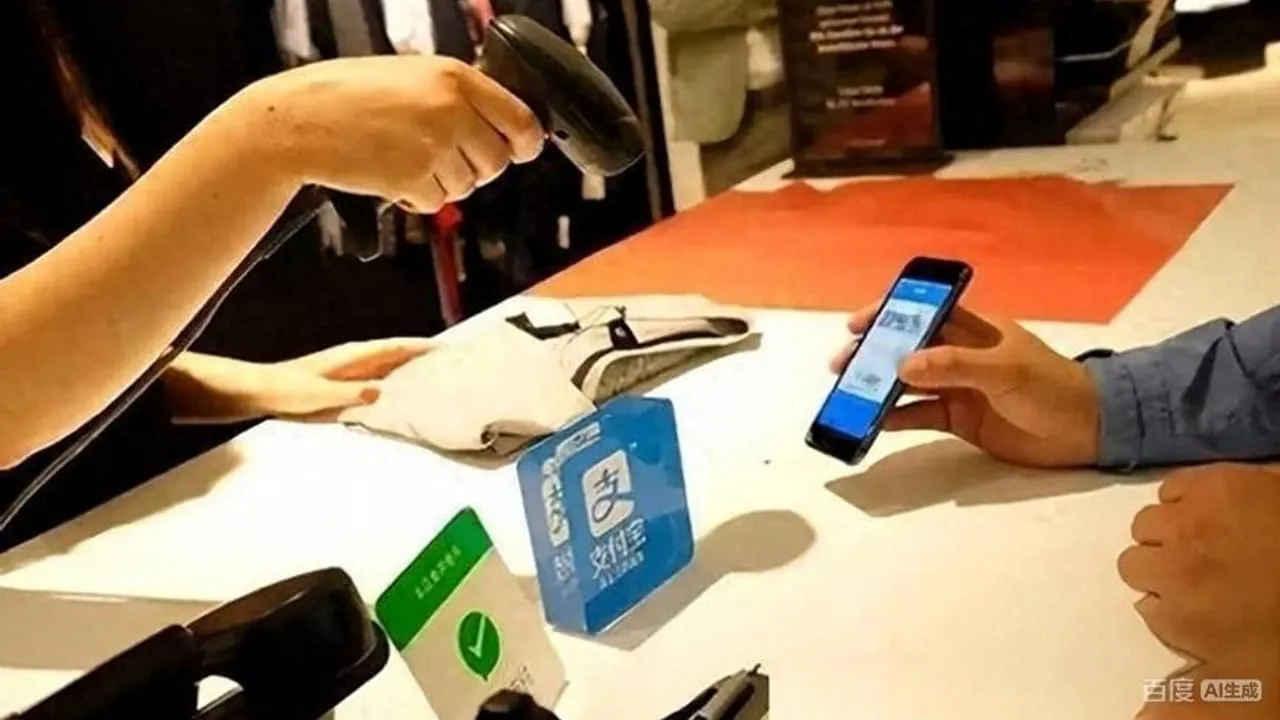
Why a foreign card now works on a Chinese phone
Linking an overseas card to a Chinese payment app once failed at verification. A July 2023 upgrade and a 2024 limit raise — $1,000 to $5,000 — made it work.
 CityLife · 城市
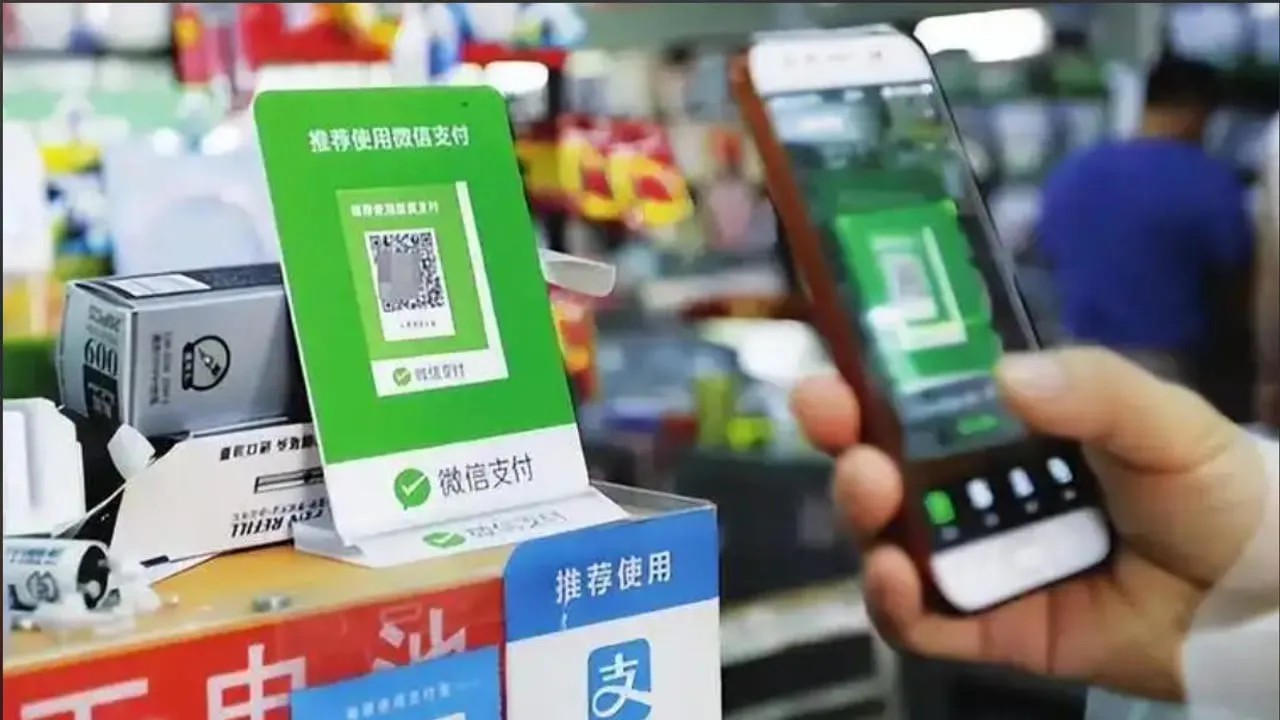
Why cash stopped being the default in China
QR payment became China's default between 2011 and 2013, built on a free 1994 patent, then halted by the central bank before formal recognition in 2016.