Food · 中国味
Why milk tea has a queue
Bubble tea came out of foam tea dated to 1983. The queue is newer — a sealing machine and a cup mixed one at a time.
The short answer
- The drink is older than the queue. Bubble tea is one branch of foam tea dated to 1983; the two shops claiming the first cup are both in Taiwan, China, dated to 1986–1987.
- The queue needed equipment. A machine that fused a film across the cup replaced the lid, and a wider straw followed so the pearls would pass through; the market it served reached 83.1 billion yuan by 2020.
- The market behind it is counted. China Chain Store & Franchise Association figures put industry revenue at 42.2 billion yuan in 2017, rising to 83.1 billion yuan in 2020.
The full history, the documents behind it, and the practical reading are below.
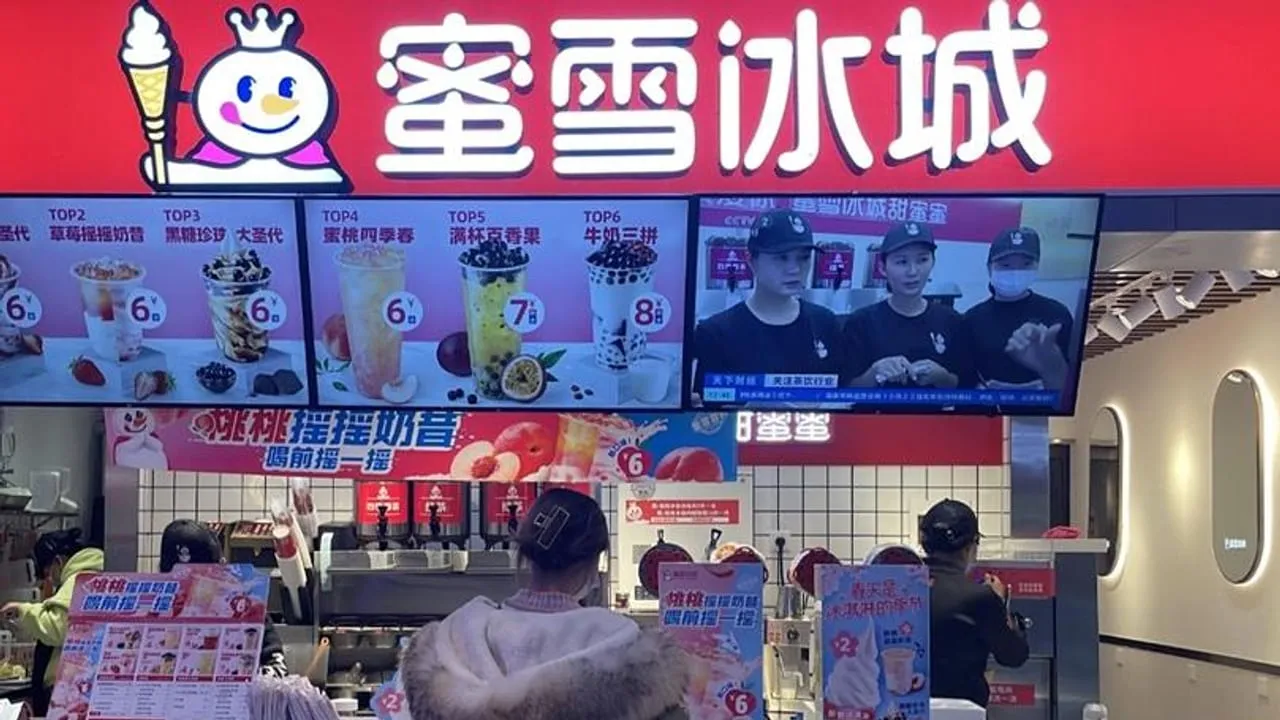
A counter faces the pavement, and a screen above it lists order numbers. A cup comes down, a machine presses a film across the top, a straw goes through the seal, and a number is called. The order was placed on a phone before the customer arrived. Outside, a line waits along the glass, most of them watching the same screen. The menu is long — tea, milk, sugar level, ice level, a topping at the bottom of the cup — and one cup costs about what a light meal costs. Nobody in the line treats the wait as a fault. A queue is what the shop is for.
The usual explanation
Outside China, milk tea is usually filed as a dessert that grew popular — sweet, chewy, a snack in a cup — and the queue as what a trend does. The drink and the trend are not the same date. The chewy part, the sealed cup and the line outside were added decades apart, and only the last of the three is recent. The drink is a good deal older than the queue it makes.
A foam-tea experiment, and two claims to it
Bubble tea is one branch of foam tea, a cold shaken tea that first appeared in 1983. Who first dropped the pearls into it is disputed, and the two shops that claim the first cup are both in Taiwan, China. The chain Chun Shui Tang dates its foam tea to 1983 and its bubble tea to 1987; the tea room Hanlin dates its version to 1987, and some accounts of that second shop put it a year earlier, at 1986. Neither claim was protected — no patent and no trademark was granted to either shop — so the drink spread without an owner. In 1988 a vendor renamed the larger pearls after the actress Yeh Tzu-mei, who was famous at the time, and the word for a big pearl stuck. From the start this was a shop invention, not a recipe handed down. The dispute itself is part of the record: two shops, two dates, and a decade of argument that ended with no one owning the drink.
Drinks assembled from shop inventions rather than inherited recipes recur across this site; the ones that carry a single decisive date are collected under habit origins.
The cup that had to travel
An everyday drink needs a lid, and a lid leaks. A machine that fused a film across the cup replaced the lid, and the drink became something that could be carried in a bag. Takeaway chains multiplied on the back of that change, and suppliers cut a wider straw so the pearls would pass through. The sealed cup is the first thing the queue depends on: a lidded cup cannot be stacked, carried and handed over the way a sealed one can. The equipment makers did the rest. A shaker, a machine that measures fructose by the gram, a sealer that presses the film in a second — each of these turned a drink a person mixed into a drink a counter could produce by the hundred. The second thing is the price. A cup sold at the price of a light meal is worth waiting for only if it is mixed one at a time. The drink also left the shop sealed, cold and upright, in a rack built to carry a dozen at once, so a busy counter could hand out a hundred in an hour without a single cup spilling on the way.
The same cheap-container logic — a product that got cheap enough to make a habit portable — is the whole story of why the thermos became a personal object.
A market counted in billions
Once the cup could travel, the drink became a market with published numbers. The China Chain Store & Franchise Association, in its 2021 report on the new tea drink, dates the “tea plus milk plus fruit” era to 2012 to 2019 and puts industry revenue at 42.2 billion yuan in 2017, rising to 83.1 billion yuan in 2020. The shops changed shape over the same years. Heytea began in 2012 as Royaltea, a name it dropped in 2016 when the trademark could not be registered, and took 100 million yuan of outside investment that year; Nayuki opened its first high-end freshly made tea shop in 2015. A made-to-order cup, priced well above the old powder mix, turned the counter into somewhere to stand and wait. The queue is not the tea. It is what happens when a cup is sealed, priced and mixed one at a time.
The made-to-order waiting list that grew over the same years, from a different direction, is told in why one app runs the whole day.
What it is not, and what the line in front of you means
This is not a claim that milk tea is an old drink. The pearls were added in 1987, and the shops that claim them are recent. It is not a health claim in either direction. And it is not a description of everyone: the habit sits in cities and among younger buyers, and the cheaper powder-mixed version sold elsewhere is a different product at a different price.
What the market numbers cannot explain is the loyalty. If the queue followed the drink, any shop selling the same tea, milk and sugar would draw the same line. It does not. Two shops a street apart sell the same liquid, one has a queue and one does not, and the difference is the name on the cup.
For a visitor the reading is small and specific. A line outside a milk-tea shop is not a sign that the drink is scarce; it is a sign that this shop mixes each cup to order. If the wait is part of what you came for, join it; if it is not, the same drink is sold without a line a few doors away. The Food section covers what a Chinese table assumes, the drink itself is filed under bubble tea, the wider pattern is under habit origins, and a different kind of made-to-order waiting is told in why one app runs the whole day.
Why it is being copied now (2026)
The sealed cup travelled before the queue did. Chinese tea-drink brands — Mixue Ice Cream & Tea among them — are named in the 2026 Chinamaxxing trend as part of what Western audiences met through short video, alongside Labubu figures and Luckin Coffee. Hashtags including #Chinamaxxing and #BecomingChinese had passed four billion cumulative views by mid-2026.
What the trend copies is not the recipe. It is the specification: a drink ordered by sugar level and ice level, sealed, and mixed one cup at a time. Those are the three things that make a counter worth standing in front of.
Common questions
Where did bubble tea come from?
Bubble tea is one branch of foam tea, a cold shaken tea dated to 1983, and both shops claiming the first cup are in Taiwan, China — Chun Shui Tang dates its version to 1987, Hanlin to 1986 or 1987. Neither claim was protected, so the drink spread without an owner.
Why is there a queue at some milk tea shops?
Because the cup is mixed to order. A sealed cup has to be pressed and handed over one at a time, and a counter that mixes each drink on request cannot serve a line faster by adding staff. Two shops a street apart sell the same tea, milk and sugar; the one with the line is the one that seals and mixes to order, and the industry it built was worth 83.1 billion yuan by 2020.
Is milk tea expensive in China?
A made-to-order cup costs about what a light meal costs, and the cheaper powder-mixed version sold elsewhere is a different product at a different price. Industry revenue in China reached 83.1 billion yuan in 2020 on that price, and the wait is part of what it buys: a cup sold at the price of a meal is worth queueing for only if it is mixed one at a time.
Does a queue mean the drink is scarce?
No. A line outside a milk-tea shop is not a sign that the drink is scarce; it is a sign that this shop mixes each cup to order. The pearls were added in 1987 and are in every cup, so if the wait is not part of what you came for, the same drink is sold without a line a few doors away.
The documents behind this
- Chun Shui Tang’s own dating of its foam tea to 1983 and its bubble tea to 1987, and Hanlin’s competing claim to 1986–1987.
- China Chain Store & Franchise Association, 2021 report on the new tea drink — 42.2 billion yuan of industry revenue in 2017 and 83.1 billion yuan in 2020.
- The film-sealing machine, which replaced the lid and made the cup something that could be carried in a bag.
Where this goes next
The Food section covers what a Chinese table assumes and how an order travels; the drink is filed under bubble tea and milk tea, and the trend it now rides under chinamaxxing.
The same made-to-order wait, from a different direction, is in why one app runs the whole day; the container that made a drink portable is told in why the thermos became a personal object; another habit that came out of a product decision rather than a custom is in why the blind box became a hobby; and the general pattern is under habit origins.
Written and checked against published sources. See how we work
Keep reading
 CityLife · 城市
Why one app runs the whole day
The app launched in 2011 as a messenger. Payment arrived in 2013 and mini programs in 2017; by 2024 it reported roughly 1.4 billion monthly users.
 Food · 中国味
Why you order by scanning the table
A code on the table opens the menu and takes the payment. The mechanism arrived with QR payment in 2011, reached the table by 2017 and settled in 2020.
 Buys · 好物
Why the blind box became a hobby
Pop Mart opened its first store in 2010. A licence in 2016, a monster in 2019 and a resale market turned a sealed box into a collecting habit.