CityLife · 城市
Why a foreign card now works on a Chinese phone
Linking an overseas card once failed at verification. A 2023 change and a 2024 limit raise made it work in local apps.
The short answer
- The barrier was verification, not design. A foreign card could often be attached; what failed was the identity check, and a single payment was capped at $1,000.
- Two dates closed it. In July 2023 both apps shipped an upgrade allowing overseas cards to be linked directly; on 1 March 2024 the central bank raised the single-transaction limit from $1,000 to $5,000 and the annual limit from $10,000 to $50,000.
- Adoption moved fast. WeChat Pay reported that in November 2024 the number and value of foreign-card transactions stood at 6.4× and 4.5× their July 2023 levels.
The full history, the documents behind it, and the practical reading are below.
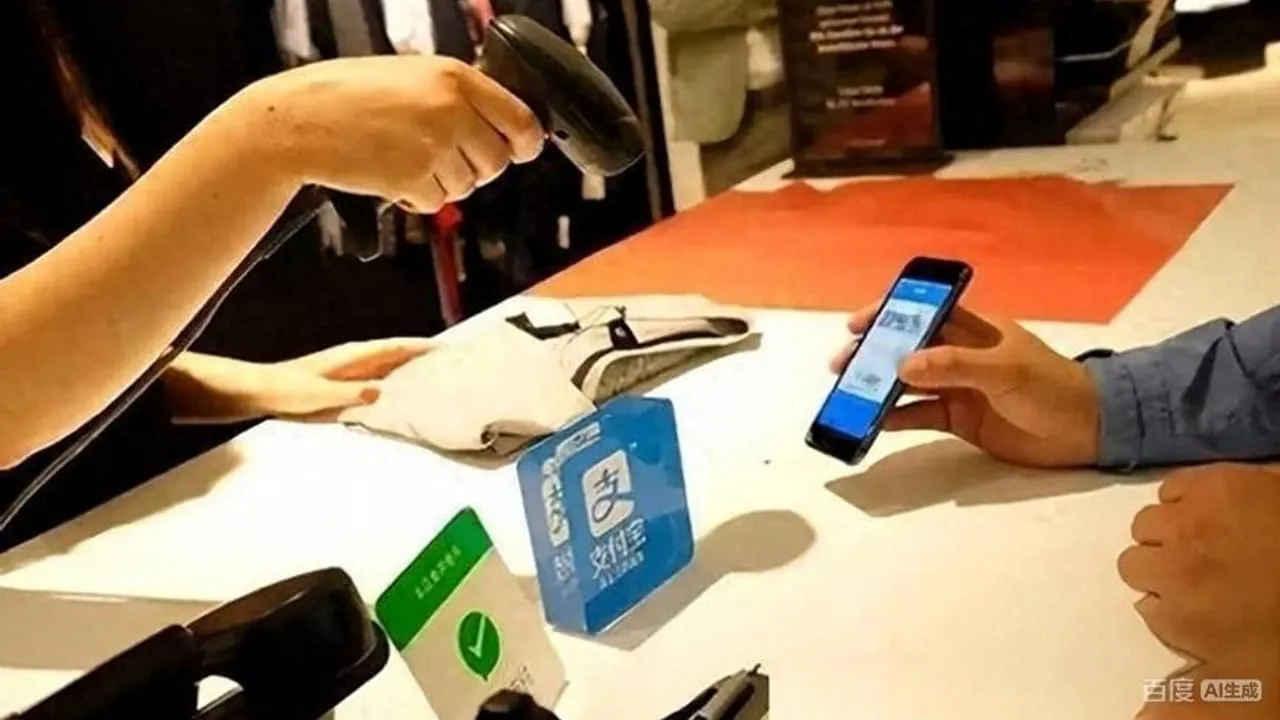
At a convenience store counter, a visitor holds up a phone. The cashier waits. The screen shows a card that will not be accepted, and the visitor reaches for notes instead, counting them out while the queue forms behind. Two days later, at a different counter, the same phone works: a code is scanned, a tone plays, the purchase is done. Nothing about the phone changed. What changed was set somewhere else, on a date, and reached the counter later.
The sense of a door that has been opened is real, and it is also fairly new.
The usual explanation
Outside China, the payment apps are usually filed as a domestic wall — handy for locals, shut to foreign cards, part of a system built to keep its distance from everyone else’s. The wall was real enough to notice. It was not a design. A foreign card could often be attached; what failed was the verification step, and the ceiling on how much a single payment could move. Both were set by decisions that carry dates.
The apps that grew without foreign cards
QR payment spread through two apps. Alipay added it in July 2011, and WeChat in August 2013, and both were built around domestic bank accounts and a domestic phone number — the mechanics are set out in the piece on why cash stopped being the default. A foreign card could in principle be attached, but not smoothly. Identity checks did not fit a passport or a name written in the other order, and a payment above a set amount was refused.
The gap this left was measured before it was closed. On 1 March 2024 the People’s Bank of China reported that in 2023 close to four million inbound visitors had used mobile payment, across more than 70 million transactions worth more than ¥10 billion (about $1.4 billion). The change to make that easier began the previous summer: in July 2023 both apps shipped an upgrade that allowed overseas cards to be linked directly for use with domestic merchants.
The domestic half of that build-out — why a printed code beat a card terminal at the counter — is told in why cash stopped being the default.
The ceiling that was raised
The second half of the fix was arithmetic. On 1 March 2024, at a State Council policy briefing, the central bank said the single-transaction limit for foreign visitors’ mobile payments would rise from $1,000 to $5,000, and the annual cumulative limit from $10,000 to $50,000. It also said verification would be simplified, and that both routes would be pushed — “foreign card, domestic binding” and “foreign wallet, domestic use” — with 13 overseas e-wallets already allowed to pay inside the country.
The measure sat inside a broader set of opinions on payment services approved by the State Council’s executive meeting on 23 February 2024, which named older people and inbound visitors as the two groups whose access needed widening. The stated problem was access, not policy; the summary the bank gave the fix was three-part, card for large amounts, code for small ones, cash to fall back on. Both routes were already partly open: the bank said the wallets of 13 overseas payment providers had been admitted to pay inside the country, sitting alongside the domestic apps that would now take a foreign card.
The payment layer a visitor now joins is the same slice of the phone that runs a Chinese day, explained in why one app runs the whole day.
What the change reached
Adoption is legible from the platforms’ side. WeChat Pay reported that in November 2024 the number and value of foreign-card transactions stood at 6.4 times and 4.5 times their July 2023 levels. On 6 November 2024, UnionPay International said overseas-issued UnionPay cards could be bound to Alipay and WeChat Pay in full, putting the card network on the same route as the apps. Alipay had already added on-screen translation across 16 languages in March 2024. Each step added a way in. None of them changed the underlying habit, which is that the phone is the till.
The push ran alongside a wider opening for visitors. From 17 December 2024 the window for visa-free transit through the country was extended to 240 hours, which raised the number of arrivals the payment change was meant to serve. The rules on cash moved the same way: the bank has restated, in a public notice in December 2020 and again in rules that took effect in February 2026, that refusing renminbi is a violation rather than a merchant’s choice.
The same system reaches the restaurant table, where a scanned code takes the order, told in why you order by scanning the table.
What it is not, and what to do at the counter
This is not a claim that a foreign card works everywhere. The bank’s own summary puts cards in the large-amount role and code payments in the small one, and the small one still assumes an app. It is not a claim that the earlier inconvenience was deliberate: the limit and the verification step were described as mismatches between two countries’ habits, not as a wall. And it is not a statement about every merchant, because a street stall may hold no card terminal at all, which is a merchant-side cost rather than a rule.
What the limit alone cannot explain is the small vendor. If the ceiling were the only barrier, raising it would settle the street. It does not. A stall that never installed a terminal and runs on a printed code is decided by the price of the terminal and the default of the domestic app — the same reason cards never spread here in the first place.
For a visitor the practical steps are few, and most are done before arrival. Link an overseas card to Alipay or WeChat Pay while the connection is reliable, since verification is easier to finish then; note that a single payment can now reach $5,000 and a year’s total $50,000; and keep some notes, because the renminbi is legal tender and a shop that refuses cash is the exception rather than the rule. CityLife collects the rest of the phone-first routines, mobile payment is the tag for this thread, its earlier half is in why cash stopped being the default, and the wider pattern is filed under habit origins.
Why it is being copied now (2026)
Paying with a phone is the item in the 2026 Chinamaxxing trend that visitors meet on their first afternoon rather than their first week. The trend — China plus the online suffix -maxxing — had carried hashtags including #Chinamaxxing and #BecomingChinese past four billion cumulative views by mid-2026, and the #ChinaTravel tag past 28 billion plays.
The numbers behind that attention are arrivals. China received 22.9 million inbound foreign visitors in the first half of 2026, up 20.4 per cent on a year earlier, and 77.7 per cent of them entered visa-free. From 17 December 2024 the visa-free transit window had already been extended to 240 hours, which raised the number of arrivals the payment change was meant to serve.
The change that makes this work is two years old, not twenty. In 2023 a foreign card would fail at the verification step; since 2024 it will not.
Common questions
Can I use Alipay or WeChat Pay with a foreign card?
Yes. In July 2023 both apps shipped an upgrade that allowed overseas cards to be linked directly for use with domestic merchants, and on 1 March 2024 the central bank said the single-transaction limit would rise from $1,000 to $5,000 and the annual cumulative limit from $10,000 to $50,000. On 6 November 2024 UnionPay International said overseas-issued UnionPay cards could be bound to both apps in full.
Should I set this up before arriving in China?
Yes — link an overseas card while the connection is reliable, because verification is easier to finish then. The steps are few and most are done before arrival: set up the app, note that a single payment can now reach $5,000 and a year’s total $50,000, and keep some notes for the cases where a terminal does not exist.
Is cash still accepted in China?
Yes. The renminbi is the legal tender of China, and refusing it is a violation rather than a shop’s policy choice — a point the central bank restated in a public notice in December 2020 and again in rules that took effect in February 2026. A street stall may carry no float at all, though, so small notes are more useful than large ones.
Why do some shops in China not take cards at all?
Because the cost of a terminal is what kept cards from spreading in the first place. Accepting a code meant printing one square of paper rather than paying a deposit for a terminal and a fee on every sale. Alipay shipped that alternative in July 2011 and WeChat in August 2013; a stall that never installed a terminal runs on a printed code, and raising the foreign-card limit does not change that arithmetic.
The documents behind this
- The People’s Bank of China briefing of 1 March 2024 — single-transaction limit from $1,000 to $5,000, annual cumulative limit from $10,000 to $50,000.
- The State Council executive meeting of 23 February 2024, whose opinions on payment services named older people and inbound visitors as the two groups needing wider access.
- The July 2023 app upgrades that first allowed overseas cards to be linked directly to Alipay and WeChat Pay.
- The 240-hour visa-free transit extension of 17 December 2024.
Where this goes next
CityLife collects the rest of the phone-first routines; the thread is filed under mobile payment, the card side under foreign cards, and the practical side under china travel.
Its earlier half is in why cash stopped being the default; the app that carries it is explained in why one app runs the whole day; the same system reaches the restaurant table in why you order by scanning the table; the journey it pays for is told in why the train replaced the plane; and the wider pattern is filed under habit origins.
Written and checked against published sources. See how we work
Keep reading
 CityLife · 城市
What actually breaks in your first week in China
China's visa-free entry covered 50 countries in 2026, and 22.9 million foreign visitors arrived in the first half. The hard parts are registration and transit.
 CityLife · 城市
Why a foreign card won't open the subway gate
Overseas cards open subway gates directly in Beijing, Shanghai, Guangzhou and Chengdu, but ticket machines still expect a local code. The gap dates from 2011.
 CityLife · 城市
Why one app runs the whole day
The app launched in 2011 as a messenger. Payment arrived in 2013 and mini programs in 2017; by 2024 it reported roughly 1.4 billion monthly users.