Culture · 文化
Why holidays come in week-long blocks
A 1999 revision built seven-day blocks around three festivals. A 2007 revision removed one and added three.
The short answer
- The block is not a count of days. China has eleven statutory holidays; the seven-day run is built by moving weekends, a method set out in 1999 and still in use.
- The mechanism dates from 18 September 1999, when Spring Festival, Labour Day and National Day each became three statutory days and were stretched to seven — the first National Day block drew 28 million trips.
- The set was rearranged on 14 December 2007: Labour Day was cut to one day, ending the May block, and Qingming, Duanwu and Mid-Autumn were added.
The full history, the documents behind it, and the practical reading are below.
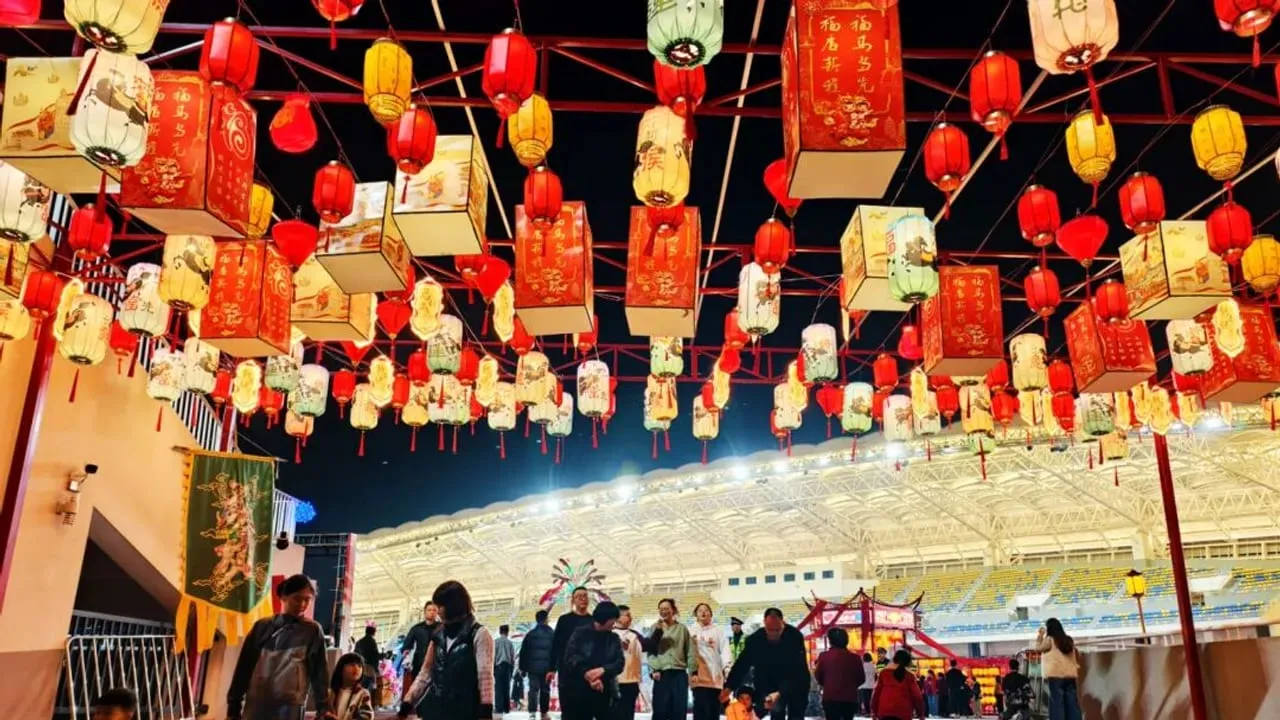
On the first day of a long holiday, the roads out of a city are solid by mid-morning and the trains are full, and on the last day the same traffic runs the other way. Before it, an office compares notes on the shifted weekends: which Saturday is a workday, which Friday is off. The whole thing is fixed in advance by a notice published once a year, and everybody plans around it. The shape people wait for is not a single day. It is a block of seven, or eight, joined together out of a festival and the weekends on either side.
The usual explanation
Outside China, the seven-day block is usually filed as a country with more days off than most, or as a long holiday that has always been there. Neither fits a date check. The block is not older than the last years of the twentieth century, and the total number of statutory holidays behind it is small. What is large is not the count of days but the way a few of them are gathered.
The first rule, and its seven days
The starting document is older and much smaller. In December 1949 the Government Administration Council issued the country’s first regulation on public holidays. It gave the whole population seven days in the year: one for New Year, three for Spring Festival, one for Labour Day and two for National Day. It also set a small rule that would matter later — if a holiday fell on a Sunday, the day off was made up on the following Monday. For fifty years this was the frame: a handful of single days, mostly taken where they fell. One precondition had to arrive first. A seven-day run only works if there are weekends at both ends to move, and the second rest day is itself dated: from 1 May 1995 a regulation on working hours cut the week to five days. The two-day weekend is the material a block is later built out of.
The days that get joined are listed under public holiday, alongside the other arrangements this site has traced to a document rather than a custom.
The revision that built the block
The block was assembled in 1999. On 18 September 1999 the State Council issued a revision of the holiday regulation, and it changed the arithmetic. Spring Festival, Labour Day and National Day each became three statutory days, and by moving the weekends on either side of them, each was stretched into a single run of seven — the three “golden weeks” that then shaped the calendar for eight years. The first of them, the National Day block of 1999, drew 28 million trips and 14.1 billion yuan in tourism spending, a figure large enough that the block was repeated and protected. The festival days had barely changed. The joining of them had. The revision also spelled out the mechanism, in a rule that survives in the current calendar: where a holiday for everyone falls on a Saturday or a Sunday, the day off is made up on a working day. That single clause is what turns three separate days into one run, and it is also what produces the long stretch of work either side. The government then gave the arrangement a name. In June 2000 a joint opinion on developing holiday tourism, approved by the State Council, used the term “golden weeks” for the three seven-day periods and described them as the result of added statutory holidays combined with two adjusted weekends.
One of the three festivals added in the same 2007 revision is told in full in why tomb-sweeping got a fixed date on the calendar.
One block out, three festivals in
The second revision rearranged the set. On 14 December 2007 the State Council issued another amendment. Labour Day was cut to a single statutory day, which ended the May block; Qingming, Duanwu and Mid-Autumn were added as statutory days; and the total of statutory holidays rose from ten to eleven. The Spring Festival block was also brought forward to begin on New Year’s Eve rather than the first day of the lunar month. Two seven-day blocks survived, for Spring Festival and National Day, and three shorter festivals took the place of the one that was removed. The same month brought a second document beside the holiday rule: a regulation on paid annual leave, which gave a worker with a year of service a block of days to take at a time of their own choosing. The calendar lost one long week and gained three festivals; the leave was meant to make up the difference. Later, in 2020, a flexible arrangement turned the May holiday back into five days by moving weekends again — the same method, applied to a smaller set.
The largest block of the year is anchored by a festival whose date moves every winter, explained in why the New Year date moves every year.
What it is not, and how to read the calendar
This is not a claim that the holidays are better or worse than anyone else’s, and it is not an argument about how long a working year should be. It is not a claim that everyone gets the block: it belongs to the person whose employer follows the national notice, and shift workers, hospital staff, transport crews and anyone in a shop that stays open often work straight through it. And it is not a claim that the total has grown much — the statutory days behind the blocks number eleven.
What the “more days off” reading cannot explain is the work that comes with the block. If the seven-day run were simply extra free time, it would sit wherever the festival falls and leave the rest of the calendar alone. It does not. The block is built by moving weekends — the trade the whole country discusses before it starts — so the days are relocated rather than added, and a long stretch of workdays is the price of the run. The same total of days is arranged into a different shape, and that arrangement, not the number, is what the calendar is protecting.
For a visitor there are two habits worth keeping. Treat the block as the busy season and book transport and rooms before the notice’s dates fill, and read a Chinese calendar for the shifted weekends before assuming a weekday is a working day. The Culture section covers the days that were fixed this way, the mechanism is filed under public holiday, the general thread is habit origins, the day added in the same 2007 revision is told in why tomb-sweeping got a fixed date, and the festival that anchors the largest block is explained in why the New Year date moves every year.
Common questions
How many public holidays does China have?
Eleven statutory days. The total went from ten to eleven in the 2007 revision, which cut Labour Day from three days to one and added Qingming, Duanwu and Mid-Autumn. The seven-day blocks people plan around are not extra days — they are those statutory days joined to moved weekends.
Why does China move weekends to create long holidays?
Because the block is a rearrangement, not an addition. A clause that survives in the current calendar — where a holiday for everyone falls on a Saturday or a Sunday, the day off is made up on a working day — turns three separate days into one run, and it is also what produces the long stretch of work either side. The first block, the National Day run of 1999, drew 28 million trips and 14.1 billion yuan in tourism spending.
Does everyone in China get the long holiday?
No. The block belongs to the person whose employer follows the national notice; shift workers, hospital staff, transport crews and anyone in a shop that stays open often work straight through it. The 2007 revision also introduced a regulation on paid annual leave, giving a worker with a year of service days to take at a time of their own choosing.
When is the worst time to travel in China?
The two surviving seven-day blocks, around Spring Festival and National Day, are the peaks — the first National Day block, in 1999, drew 28 million trips — so book transport and rooms before the notice’s dates fill. The notice is published once a year, which means the shifted weekends can be read in advance — check a Chinese calendar before assuming a weekday is a working day.
The documents behind this
- The 1949 regulation on public holidays, issued by the Government Administration Council in December 1949 — seven days in the year, across four holidays.
- The 1999 revision, 18 September 1999, which made Spring Festival, Labour Day and National Day three statutory days each.
- Decree No. 513, 14 December 2007, which cut Labour Day to one day and added three festivals as statutory days.
- The June 2000 joint opinion on developing holiday tourism, approved by the State Council, which gave the three seven-day periods the name ‘golden weeks’.
Where this goes next
The Culture section covers the days that were fixed this way; the mechanism is filed under public holiday, the block itself under golden week, and the practical side under china travel.
One of the three festivals the 2007 revision added is told in why tomb-sweeping got a fixed date on the calendar; the festival anchoring the largest block is in why the New Year date moves every year; another arrangement that runs on a single national measure is in why one country keeps one clock; and the general pattern is under habit origins.
Written and checked against published sources. See how we work
Keep reading
 Culture · 文化
Why tomb-sweeping got a fixed date on the calen…
Grave-sweeping is old; the public holiday is not. A 2007 revision added Qingming to China's paid holidays, and the first one fell on 4 April 2008.
 CityLife · 城市
Why a foreign card now works on a Chinese phone
Linking an overseas card to a Chinese payment app once failed at verification. A July 2023 upgrade and a 2024 limit raise — $1,000 to $5,000 — made it work.
 CityLife · 城市
Why one app runs the whole day
The app launched in 2011 as a messenger. Payment arrived in 2013 and mini programs in 2017; by 2024 it reported roughly 1.4 billion monthly users.