Culture · 文化
Why the museum is free and still booked out
Free admission since 2008 pushed demand past the door; a timed booking has replaced the queue since 2020.
The short answer
- Two dates do different work. The price came off the door in 2008; the quota went on it in 2020. Between them, the scarce thing became the time slot rather than the ticket.
- The notice was joint and specific: four central departments, 23 January 2008, filed as 中宣发〔2008〕2号, with 11.2 billion yuan allocated by the central treasury across 2008–2012.
- The booking arrived with the reopening. On 1 May 2020 the national museum reopened at 3,000 visitors a day in three timed slots, online only; the Palace Museum at 5,000, down from 8,000.
The full history, the documents behind it, and the practical reading are below.
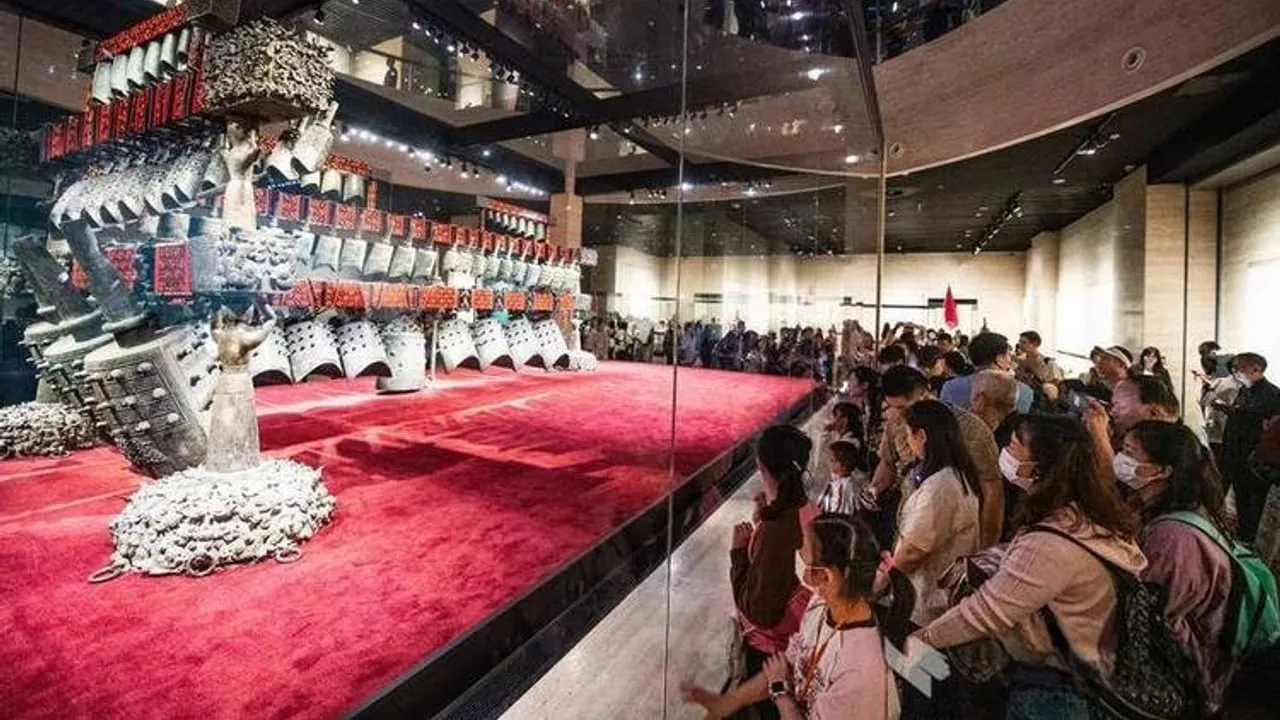
At a large museum entrance, the old ticket window is closed and a code is taped to the barrier. Visitors stop, hold a phone against it, and walk through; a screen beside the gate shows the day’s remaining places counting down. A printed notice names the day’s limit and the time slots, and says that tickets are not sold at the door. Inside, the halls are free to enter and full of people. Someone who arrived without booking turns back at the barrier, reading the notice a second time.
The usual explanation
Outside China, a museum that is free but nearly impossible to enter is usually filed as a contradiction, or as a queue that got out of hand. The record is two dates, and they do different work. One took the price off the door. The other put a quota on it. Between them, the scarce thing in a Chinese museum stopped being the ticket and became the time slot.
The notice that removed the price
On 23 January 2008 four central departments — the publicity department, the finance ministry, the culture ministry and the heritage administration — jointly issued a notice on free admission, filed as 中宣发〔2008〕2号. It applied to public museums and memorial halls under cultural and heritage departments, and to the national patriotism-education sites. The steps were dated. From 2008, museums under central cultural and heritage departments opened free, provincial comprehensive museums opened free, and seven pilot provinces opened their provincial, city and county museums free. From 2009, the rule extended to all public museums and memorial halls except those that are themselves historic buildings or sites, which kept a reduced-price policy for some visitors. Money followed the change: the central treasury created a special fund for free admission in 2008 and allocated 11.2 billion yuan across 2008 to 2012. The order of the two dates matters. The price was removed first, in 2008, and the quota was added later, in 2020. A visitor who came in the years between met a free museum and a long queue on the steps; a visitor who comes now meets a free museum and a grid of empty slots.
The same pattern — a facility provided because a rule says so rather than because a custom does — sits behind the paper in a public toilet, told in why you carry your own toilet paper.
What a free door does to a queue
The removal of a price raises demand, and demand meets a ceiling that has nothing to do with money. That ceiling is the building. A hall holds a fixed number of people, a stair carries a fixed flow, and a security line moves at a fixed rate. For most of the decade after 2008 the ceiling was managed the old way, at the door: a long queue, a crowd on the steps, a wait measured in hours on the busiest days. The price was gone, but the arithmetic that governs a building had not moved, and free admission only pushed more people against it. The door had also grown: by the national heritage administration’s count the heritage system held 1,722 museums in 2007, and with institutions run by other departments and by private founders the national total passed 2,400, against 349 in 1978. Removing the price met that larger system with still more visitors.
A daily quota on a building everyone wants a place in is the same arithmetic as a holiday block that compresses travel into one week, explained in why holidays come in week-long blocks.
The booking that replaced the door
The second date arrived with a reopening. Museums in China closed in late January 2020. When they reopened, they reopened against a quota. On 1 May 2020 the national museum reopened at 3,000 visitors a day, in three timed slots, by online booking only, with no group bookings and no tickets sold on site. The Palace Museum reopened the same day at 5,000 a day, down from 8,000, with ten-day advance booking by identity card. The timed booking did not go away when the reopening rules eased. It became the ordinary way in, and it is the mechanism a visitor meets today: free to enter, but limited by the day and the hour. The pattern set in those weeks — a daily cap, a set of time slots, an identity check at the gate, and no paper ticket — is what most large museums now issue. Arriving is no longer a purchase or a queue; it is a booking made several days ahead.
The booking itself is made on a phone, which is the same move the rest of a Chinese day made in 2017 — why one app runs the whole day.
What it is not, and how to get in
This is not an argument for or against the free-admission policy, and it is not a verdict on the booking. It is not a claim that all museums are free — museums that are historic buildings or sites still charge, and a travelling special exhibition can carry its own ticket. And it is not a description of every museum: many are free and walk-in, with no queue at all.
What the price story cannot explain is the difference between two free museums. If a removed ticket were the whole cause, every free museum would be equally busy, and they are not. A handful are booked out days ahead, in a country with thousands of museums, and the thing that sorts the famous from the quiet is not the price — which is zero in both — but the daily quota on a building everyone wants a place in. The free door explains why the crowd is there. The quota explains where it stops.
For a visitor the practical answer is short. A place at a famous museum is a booking, not a purchase, so the step to plan is the slot, not the money: look several days ahead, take the time you are offered, and go when it says rather than when you feel like it. The Culture section covers the arrangements that turn out to have dates, the access mechanism is filed under museum access, the wider thread is habit origins, and another rule that quietly moved a date is told in why the New Year date moves every year.
Common questions
Are museums in China free?
Most public museums and memorial halls are, and have been since 2008. Four central departments issued a joint notice on 23 January 2008 laying out the steps — from 2008, museums under central cultural and heritage departments, provincial comprehensive museums, and seven pilot provinces opened free; from 2009 the rule extended to all public museums and memorial halls except those that are themselves historic buildings or sites, which kept a reduced-price policy for some visitors.
Why can’t I get a ticket to a famous Chinese museum?
Because the limit is a daily quota, not a price. Museums in China closed in late January 2020 and reopened against a cap: the national museum at 3,000 visitors a day in three timed slots, online booking only; the Palace Museum at 5,000 a day, down from 8,000, with ten-day advance booking by identity card. The pattern set in those weeks became the ordinary way in.
Do I need to book a Chinese museum in advance?
For any large or famous one, yes — the daily quotas are small and the slots go early: the national museum admits 3,000 visitors a day, the Palace Museum 5,000. A place at a famous museum is a booking rather than a purchase, so the step to plan is the slot, not the money. Take the time you are offered and go when it says rather than when you feel like it.
How many museums are there in China?
By the national heritage administration’s count, the heritage system held 1,722 museums in 2007, and with institutions run by other departments and by private founders the national total passed 2,400 — against 349 in 1978. That is the system the removal of the price met in 2008, and it is why the same free entry produces a long queue at one building and an empty hall at another.
The documents behind this
- The free-admission notice of 23 January 2008, issued jointly by four central departments and filed as 中宣发〔2008〕2号.
- The central treasury’s special fund for free admission, 11.2 billion yuan allocated across 2008 to 2012.
- The reopening rules of 1 May 2020 — a daily cap, timed slots, online-only booking and no tickets sold on site.
Where this goes next
The Culture section covers the arrangements that turn out to have dates; the access mechanism is filed under museum access, the admission policy under free admission, and the practical side under china travel.
Another rule that quietly moved a date is in why the New Year date moves every year; a supply decision written into a public rule is in why you carry your own toilet paper; and the general pattern is under habit origins.
Written and checked against published sources. See how we work
Keep reading
 CityLife · 城市
Why a foreign card now works on a Chinese phone
Linking an overseas card to a Chinese payment app once failed at verification. A July 2023 upgrade and a 2024 limit raise — $1,000 to $5,000 — made it work.
 CityLife · 城市
Why one app runs the whole day
The app launched in 2011 as a messenger. Payment arrived in 2013 and mini programs in 2017; by 2024 it reported roughly 1.4 billion monthly users.
 CityLife · 城市
Why one country keeps one clock
China spans five geographic hours and keeps one standard time, set on the 120th meridian since 1949. The far west keeps a second clock, two hours behind.