Wellness · 养生
Why everyone does baduanjin in the park
The movements are old. The version taught in parks today was standardised in 2003 and numbered the 97th national sport.
The short answer
- The routine is old; the version people practise is not. The state sports authority put qigong on its own national list as the 97th sport in March 2003, and released the standardised form of baduanjin in the same year after commissioning an expert rewrite in 2001.
- It was a national rollout, not a local custom. Trial promotion in more than 20 provinces and cities ran in two batches in June and December 2003, with training courses, teaching material and instructor programmes.
- What fills the parks is therefore administrative in origin. A movement set attributed to a much earlier period has been taught by a state programme since the early 2000s, which is not the same claim as saying people invented it.
The full history, the documents behind it, and the practical reading are below.
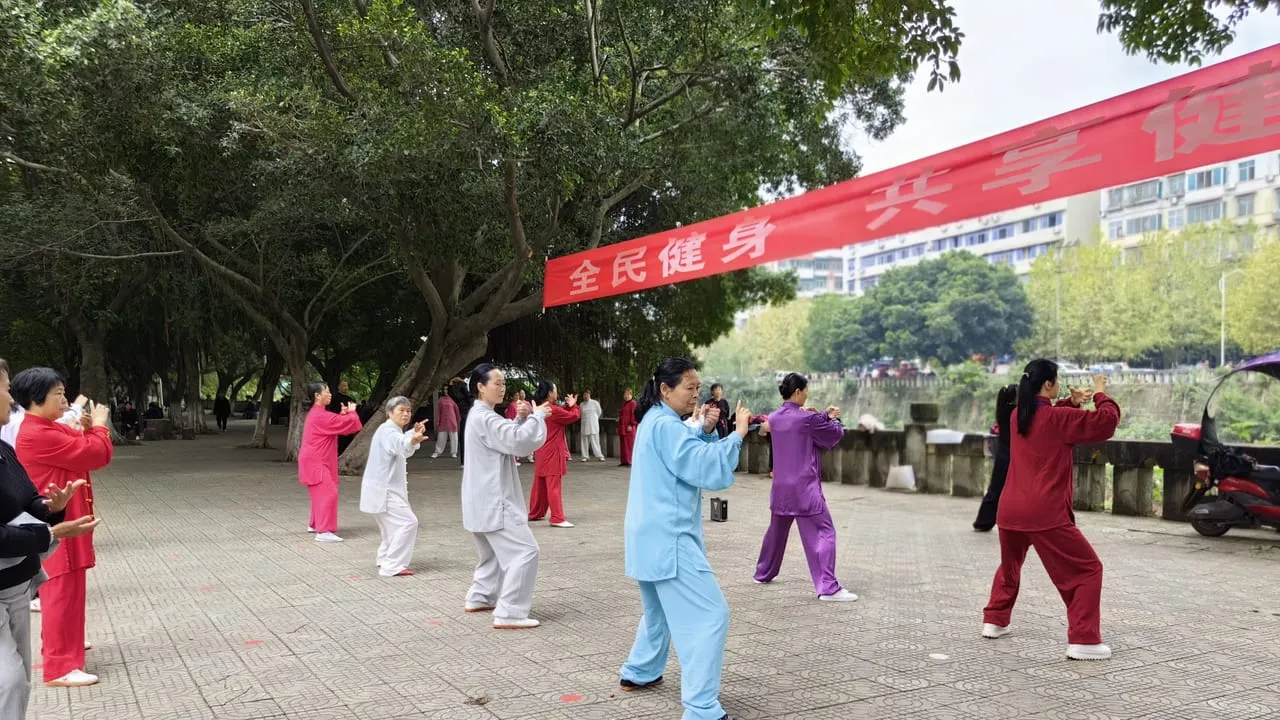
Eight movements, done slowly, in a row, in a small group on a paved path. Nobody talks. The sequence starts with the feet, moves up through the arms and the neck, and finishes with a shake of the legs. It takes about twelve minutes. The person leading it stands where everybody can see, and the group is mixed in age from teenagers to people well past eighty, arranged in rows rather than a circle.
What is striking from the outside is how many of them are there at the same time. In any city park early in the morning, the same routine is running in several places at once, and the person leading is usually not a professional instructor. She learned it where most of them learned it.
The usual explanation
Two explanations get offered, and only one survives a date check.
The first is antiquity: baduanjin is an ancient Chinese practice stretching back centuries, practised by generations and preserved in its original form. The second is health: it is practised because it works, which is why so many people over sixty do it every morning and why so many videos of it run into millions of views.
The dates complicate both. The standard version being taught has a traceable authorship — an expert committee revised the movements, and a state body then approved and promoted a specific set, in 2003, as one of four health-qigong forms alongside yinjinjing, wuqinxi and liuzijue. That does not make the movements new; the sequences existed before the twentieth century. It does mean the version in the park has a commissioning document.
On the second point the record is blunt. The authority responsible for the promotion is a sports administration, not a health one, and the department’s own accounts describe what it did in terms of management, standardisation, training and publicity — the language of a sport, not of a therapy. Whether a given person benefits from practising it is not something the promotion documents claim to have measured.
What the programme did do is put a standardised routine into thousands of parks, which is a considerably larger thing than a cultural practice surviving.
The 97th sport
The institutional step is precise and worth stating exactly, because it explains more than any description of the movements can.
Qigong had a complicated status through the 1980s and 1990s, during which the practice was often split between what was called medical qigong and what was called health qigong, with the first falling under health authorities and the second under sport. A dedicated administrative body was established in 2001 to handle the sport side.
In March 2003 the state sports administration added fitness qigong to the official list of sports practised in the country, numbering it the 97th, and issued management rules for the activity stations and points where people practise. In August that year it sent a proposal on running trial promotion of the four forms to the leadership, which approved it, and a national conference followed in October. Actual trials had already begun in June and again in December, across more than 20 provinces and cities including three large municipalities and several provinces, supported by instructor training courses, a course for overseas enthusiasts, and published teaching material.
The four forms were baduanjin, yinjinjing, wuqinxi and liuzijue. All four are older than the programme. What the programme did was fix a version of each, train people to teach that version, and put funding behind the training.
Two batches, twenty provinces
The rollout is the part that shows up in the parks, and it has a shape that is easy to recognise because it is bureaucratic rather than organic.
Two batches in a single year is not how a folk practice spreads. It is how a programme pilots, reviews, corrects and restarts. What came out of it was an instructor training programme, teaching material deliberately made into a finished product, an association set up to carry the work beyond one administration, and a research programme run through a university partnership.
By the middle of the next decade the promotion was visibly established. A 2024 account put baduanjin alongside other traditional projects as a routine choice for people who want exercise without equipment or a venue, and noted that a single teaching video on one platform had passed 35 million views while another had passed 18 million. The description of it as simple to learn and possible anywhere is not incidental. It was designed to be.
What this produces in a park is a fixed routine with a fixed leader. The instructor at the front is usually a retiree who completed one of the courses, which means the teaching is passed along through the programme rather than learned from an elder in the family. The result looks traditional and behaves like a standard, which is exactly what it is.
Why the movement looks the way it does
The revision that produced the modern form was motivated, and the motive is on the record.
Practitioners had complained for years that some of the older versions demanded flexibility that ordinary middle-aged and older participants did not have, so movements were softened and shortened to be doable by a wider range of adults. The four forms were written up as teaching material suitable for national promotion, with the teaching points standardised rather than left to local masters.
That last detail explains something a visitor notices without being told. There is very little variation in what people are doing. In a practice that had genuinely survived for centuries, one would expect regional differences, disagreements about sequence, and teachers who did it differently on principle. None of that shows up, because the version in use is one document.
The aesthetic is the opposite of improvised. The slow continuity, the fixed count, the silence in the group, and the way the leader counts aloud in time with the movement — all of that reads as ritual, and it is, in the sense that it is delivered the same way to everyone.
None of this makes it less interesting. A standard that outlives the body that wrote it is a genuinely modern phenomenon, and the fact that it feels older than it is not a criticism of it. It is the reason it is worth asking where it came from.
What it is not, and how to join in
Three things this account is not. It is not a health claim: nothing here argues that any of the movements benefits a body, and the promotion documents do not make that argument either. It is not a claim that the practice is new — the sequences substantially predate the programme, and calling a standardised version new would be its own error. And it is not a description of every park in China, since the programme’s reach is extensive rather than universal and the practice is far more visible in some cities than others.
What the dates describe is an origin story with an administrative chapter at the end of it. The movements were standardised in 2001, adopted as the 97th national sport in 2003, and rolled out to more than 20 provinces and cities in two batches that year.
If you want to practise it, the practical facts are ordinary. It needs no equipment, no clothes and no membership; it is done standing, outdoors, in a group, and it runs about twelve minutes. Groups assemble at a fixed hour in the morning and are led by whoever volunteered for the instructor course, and joining one usually means standing at the back of a row and following. Nothing needs to be bought and nothing needs to be arranged in advance.
The wider pattern is collected under Wellness, the routine itself is filed under baduanjin and qigong, and the standardisation mechanism under habit origins. The same pattern of a state programme producing something that reads as tradition appears in why hot water is the default drink in China, and the containers people carry to a park are covered in why the thermos became a personal object.
Why it is being copied now (2026)
Baduanjin is one of the few things in this catalogue that travelled intact, and the reason is that it needs nothing. No purchase, no language, no space beyond a patch of pavement, and no permission.
The Chinamaxxing trend that has been running overseas since 2025 picked it up along with hot water, foot soaking and goji berries, and it spread through exactly the videos the promotion programme never planned. Teaching clips in English are widely shared, the routine is short enough to follow from a single screen, and the usual framing is early morning, outdoors, and better than the gym.
What does not travel is the part that would explain it. The videos almost never mention that the version being copied was written in 2001 and exported by a sports administration in 2003. That is the more interesting fact, and it is the reason this is not another account of a Chinese custom.
Common questions
Is baduanjin an ancient Chinese practice?
The movements are, substantially, and their exact origins are hard to pin down. The version people practise today is not. It was revised by an expert committee, approved and promoted as one of four health-qigong forms, and standardised in 2003.
When did the state start promoting it?
In 2003, and as a formal programme. Fitness qigong was added to the national list of sports in March of that year as the 97th sport. Trial promotion of the four forms — baduanjin, yinjinjing, wuqinxi and liuzijue — ran in two batches in June and December across more than 20 provinces and cities.
Why does everyone do the same version?
Because there is a standard. The movements were rewritten in the early 2000s partly so that ordinary middle-aged participants could perform them, then fixed as teaching material. The result is that a park routine that looks traditional behaves like a standard, without regional variation.
Is it good for you?
This site makes no health claim in either direction. What the record shows is that the promotion was run by a sports administration and described in terms of standardisation, training and management rather than therapy. Whether a practice benefits an individual is not something the programme documents address.
Do you need to join a class or buy anything?
Neither. It needs no equipment, no clothes and no membership, and groups usually assemble at a fixed hour in the morning with someone leading who volunteered for the instructor course. Joining one usually means standing at the back of a row and following for about twelve minutes.
The documents behind this
- The addition of fitness qigong to the official national list of sports, March 2003, numbered the 97th, with management rules issued for the activity stations and points where it is practised.
- A proposal on running trial promotion of the four fitness qigong forms, submitted August 2003 and approved, followed by a national conference that October.
- Trial promotion in two batches, June and December 2003, across more than 20 provinces and cities, with instructor training courses, published teaching material and a course for overseas practitioners.
- A 2024 report on baduanjin as a fitness choice, noting its use without equipment or venue and the view counts of widely shared teaching videos.
Where this goes next
The Wellness section covers the everyday rules around the body and where they came from. The practice is filed under baduanjin and qigong, and the standardisation mechanism under habit origins.
For the other half of the morning routine, read why hot water is the default drink in China; for what people carry to the park, why the thermos became a personal object. For why a practice that looks ancient can be written down in a recent document, see why these habits look older than they are.
Written and checked against published sources. See how we work
Keep reading
 Buys · 好物
Why the thermos became a personal object
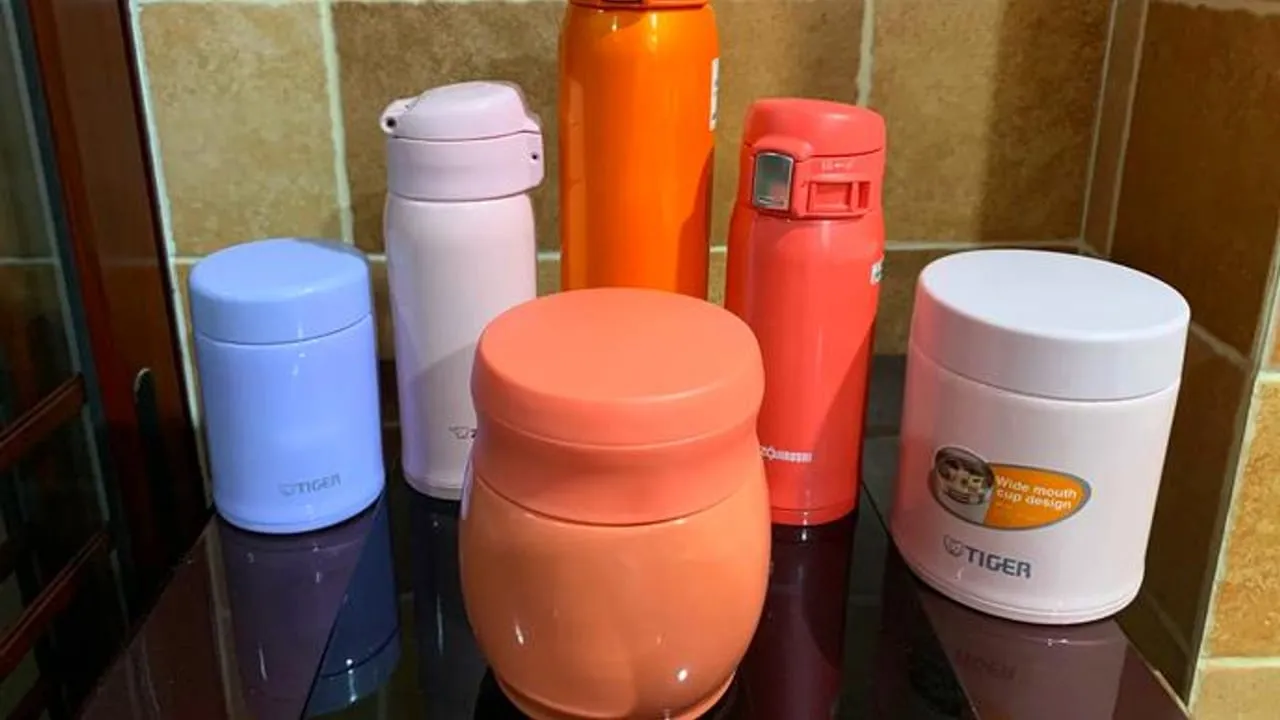
Glass vacuum flasks stayed on the table for most of the century. A 1994 Chinese copy of a 1988 Japanese original is why hot water now follows you around.
 Wellness · 养生
Why hot water is the default drink in China
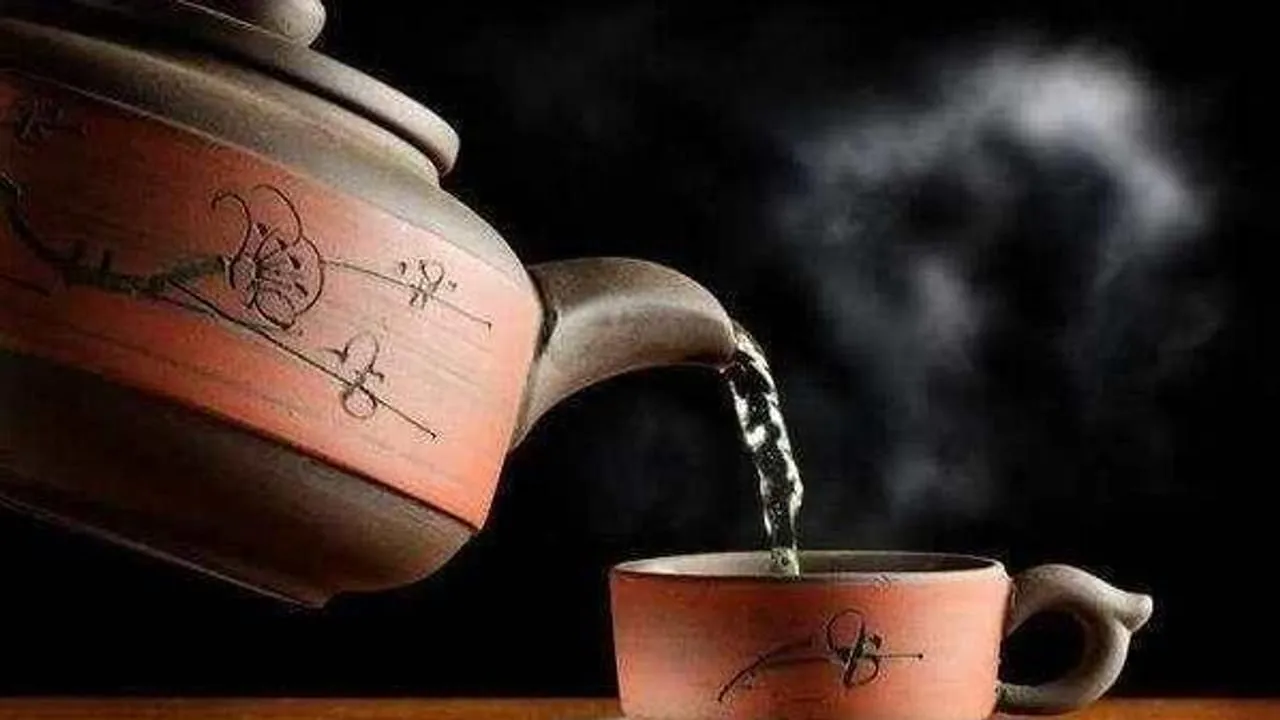
Hot water is China's default drink because of a 1934 hygiene drive, a 1952 public-health campaign and a 1985 water standard — not because it is ancient.
 Buys · 好物
Why the blind box became a hobby
Pop Mart opened its first store in 2010. A licence in 2016, a monster in 2019 and a resale market turned a sealed box into a collecting habit.