Culture · 文化
Why you carry your own toilet paper
Public toilets are supplied by a standard, not by habit. A 2003 rule put a paper box in every tourist-toilet stall.
The short answer
- It is a line in a specification. The tourist-toilet standard GB/T 18973-2003 was published on 24 February 2003 and in force from 1 May 2003.
- The revision kept the box. GB/T 18973-2016, effective 29 August 2016, replaced five stars with three grades and left the paper box, coat hook and waste bin in the requirements every grade has to meet.
- The programme behind it is dated too. A three-year campaign from 2015 targeted 57,000 toilets; by October 2017, 68,000 were completed, 19.3% above target.
The full history, the documents behind it, and the practical reading are below.
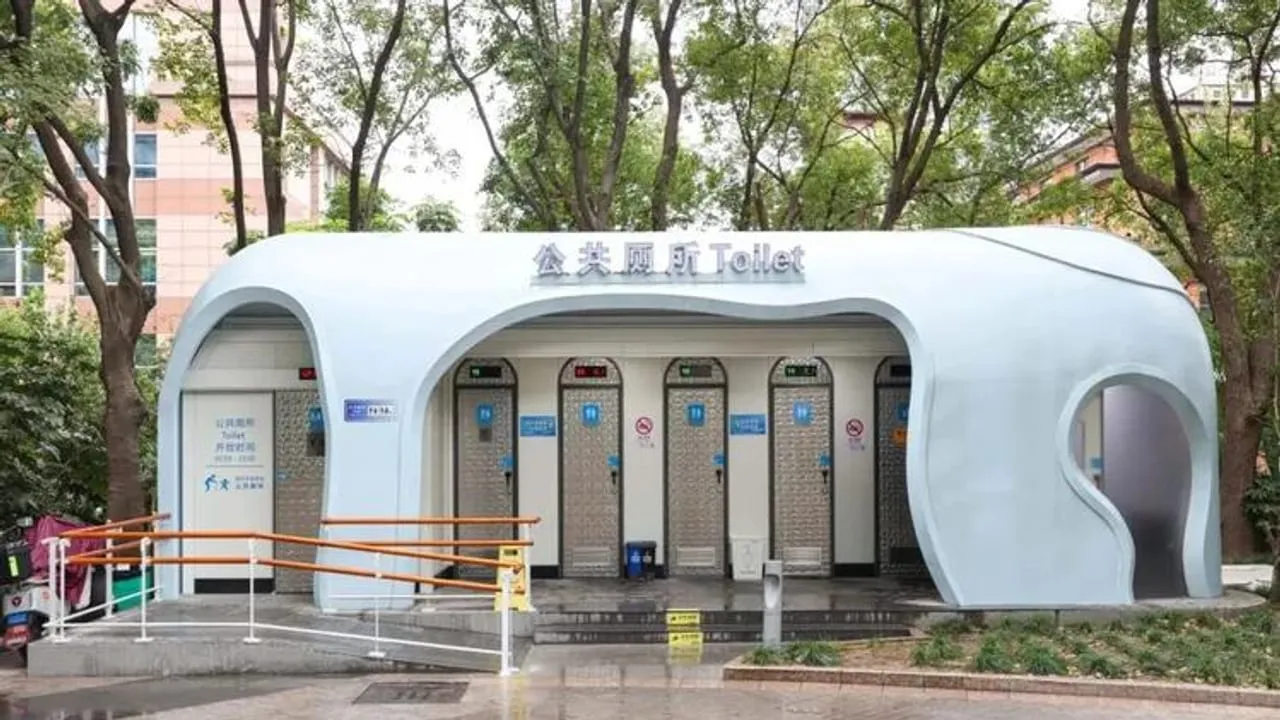
A public toilet near a park gate has a small vending box mounted outside it. Inside, the floor is dry and the fittings look recent; a hook on the back of the door holds a bag, and the paper dispenser beside the bowl is sometimes full and sometimes empty. At the next one along, a dispenser hangs by the row of basins, and a coin buys a folded pack from the box on the wall. Most people who come through the door are already carrying a small square pack of their own, creased flat into a pocket or a coat. Nobody comments on the dispenser. It is simply checked before the door is shut.
The usual explanation
Outside China, the missing paper is usually filed one of two ways: as a private habit, something people here are raised to carry, or as a sign that public services are under-supplied. Both skip the same step. Whether a public toilet holds paper is decided by which standard it falls under, and that standard has a date. The habit is downstream of that decision, not upstream of it.
A standard that puts a box in every stall
The paper in a tourist toilet is written into a national standard. In 2003 the national tourism administration issued one, GB/T 18973-2003, published on 24 February 2003 and in force from 1 May 2003, which rated tourist toilets by stars. It was revised in 2016: GB/T 18973-2016, published and effective on 29 August 2016, replaced the five stars with three grades — A, AA and AAA — and, among its requirements, put a toilet-paper box, a coat hook and a waste bin inside every stall. A third version, GB/T 18973-2022, renamed the standard and replaced the grades with two categories. The paper is not a courtesy here. It is a line in a specification, and it has been one since 2003. The 2016 revision did not add the box; it kept it in the base requirements that every grade has to meet, and tightened the rest around it — the paper box, the hook and the bin sit in the common part of the standard, not in the top grade alone.
The same class of rule — a facility written into a public standard rather than left to custom — is what took the ticket off a museum door, told in why the museum is free and still booked out.
Three years, then three more
A standard describes a toilet; a programme builds one. In early 2015 the national tourism administration began a three-year campaign to build or upgrade tourist toilets, with a target of 57,000 units between 2015 and 2017 — 33,000 new, 24,000 upgraded — under the stated aim of being enough, clean and odourless, practical and free, and well managed. By October 2017, 68,000 had been completed, 19.3% above the target, paid for by 1.04 billion yuan from the national tourism development fund and more than 20 billion yuan raised by local governments. The same years added a second fixture: by late 2017, the administration reported that all 249 top-grade scenic areas had installed a family restroom, and more than 3,000 lower-grade ones had installed them where the site allowed. On 19 November 2017 a follow-on plan set a new target of 64,000 toilets for 2018 to 2020. The totals are large. What a visitor meets on an ordinary afternoon is small: a toilet inside the programme is meant to hold paper, and a toilet outside it is not.
The instruction-plus-facility pattern is the same one that made boiled water the default drink, told in why hot water is the default drink in China.
Whose toilet is it
The scope is what decides the pocket pack. The 2016 standard applies to toilets at tourist sites, along tourist routes, at transport hubs, at rural tourism spots, in tourist restaurants and entertainment venues, and on tourist streets — the ones a visitor is most likely to meet on a trip. The 2022 revision widened the frame a little, bringing the public toilets of libraries and cultural centres into view for the first time. Outside that list, a toilet belongs to whoever runs the building: a station, a park, a market, a neighbourhood committee, a shopping centre. Each of those answers to its own arrangement, and paper is one of the things the arrangement may or may not include. So the supply is not uniform, and it was never meant to be. It is tiered by category, and the tier is set by who maintains the door. That is why the same day can hold both: a paper box that is part of a specification at a scenic gate, and a dispenser that is one line in a shopping centre’s cleaning rota. The difference is not the visitor and it is not the town. It is the document the door answers to.
The tiering by category is why the supply is not uniform, and the wider class of facilities written into public rules is filed under facility standard.
What it is not, and what to do at the door
This is not a claim about people, and it is not a claim about hygiene; nothing here argues that one arrangement is better than another, in either direction. It is not a claim that paper is rare — in a renovated tourist toilet it is standard, and the standard is more than twenty years old. And it is not a description of everyone: plenty of people carry nothing and rely on the dispenser, and plenty of dispensers are full.
What the supply story cannot explain is the pack that stays in the pocket. If a missing dispenser were only a question of which toilet you are standing in, then the renovation programme — 68,000 toilets by late 2017 and 64,000 more planned — should have thinned the habit as it spread. It did not, because the toilets a person uses between waking and sleeping are mostly not on the tourist list: the office, the shopping centre, the transit station, the park. The programme reached the sites. The pocket reaches everywhere.
For a visitor the practical answer is small. Carry one folded pack, and check the dispenser rather than assume it. The Culture section covers the everyday arrangements that turn out to have dates, the supply mechanism is filed under facility standard, the wider class of facilities written into public rules is under public health campaign, the general thread is habit origins, and the same kind of supply decision sits behind why hot water became the default drink.
Common questions
Do I need to bring toilet paper in China?
Carry one folded pack, and check the dispenser rather than assume it. Whether a public toilet holds paper is decided by which standard it falls under: a tourist toilet has carried a paper box in every stall since the 2003 standard, and a toilet outside that list answers to whoever runs the building.
Why do some Chinese public toilets have no paper?
Because the supply is tiered by category rather than uniform. The 2016 standard applies to toilets at tourist sites, along tourist routes, at transport hubs, at rural tourism spots, in tourist restaurants and entertainment venues, and on tourist streets. Outside that list — a station, a park, a market, a shopping centre — paper is one of the things the operator’s arrangement may or may not include.
Are public toilets in China free?
The 2015–2017 programme targeted 57,000 toilets under the stated aim of being enough, clean and odourless, practical and free, and well managed. By October 2017, 68,000 had been completed, 19.3 per cent above the target, paid for by 1.04 billion yuan from the national tourism development fund and more than 20 billion yuan raised by local governments.
When did Chinese public toilets start providing paper?
The requirement is more than twenty years old. GB/T 18973-2003, published on 24 February 2003 and in force from 1 May 2003, rated tourist toilets by stars. The 2016 revision did not add the box — it kept it in the base requirements every grade has to meet, and tightened the rest around it.
The documents behind this
- GB/T 18973-2003, the tourist-toilet rating standard, published 24 February 2003 and in force 1 May 2003.
- GB/T 18973-2016, published and effective 29 August 2016 — three grades, with the paper box, coat hook and waste bin in the common requirements.
- GB/T 18973-2022, the third version, which renamed the standard and replaced the grades with two categories.
- The 2015–2017 toilet campaign — a 57,000-unit target, 1.04 billion yuan from the national tourism development fund and more than 20 billion yuan raised by local governments.
Where this goes next
The Culture section covers the everyday arrangements that turn out to have dates; the supply mechanism is filed under facility standard, the wider class under public health campaign, and the practical side under china travel.
The same kind of supply decision sits behind why hot water became the default drink; a public facility opened free by notice rather than by custom is in why the museum is free and still booked out; and the general thread is habit origins.
Written and checked against published sources. See how we work
Keep reading
 CityLife · 城市
Why a foreign card now works on a Chinese phone
Linking an overseas card to a Chinese payment app once failed at verification. A July 2023 upgrade and a 2024 limit raise — $1,000 to $5,000 — made it work.
 CityLife · 城市
Why one app runs the whole day
The app launched in 2011 as a messenger. Payment arrived in 2013 and mini programs in 2017; by 2024 it reported roughly 1.4 billion monthly users.
 CityLife · 城市
Why one country keeps one clock
China spans five geographic hours and keeps one standard time, set on the 120th meridian since 1949. The far west keeps a second clock, two hours behind.