Culture · 文化
Why the New Year date moves every year
The calendar is old. The Gregorian switch came in 1912, the name in 1914 and the paid holiday in 1949.
The short answer
- The rule is published, not inherited. GB/T 33661-2017, ‘Calculation and promulgation of the Chinese calendar’, was issued 12 May 2017 and in force from 1 September 2017, drafted by the Purple Mountain Observatory.
- The window is fixed even though the date moves. The new year falls between 21 January and 21 February; in 2026 it fell on 17 February.
- The name is younger than the festival. In 1914 the interior ministry proposed renaming the first day of the first lunar month Spring Festival; the paid day came with the first holiday regulation of 23 December 1949.
The full history, the documents behind it, and the practical reading are below.
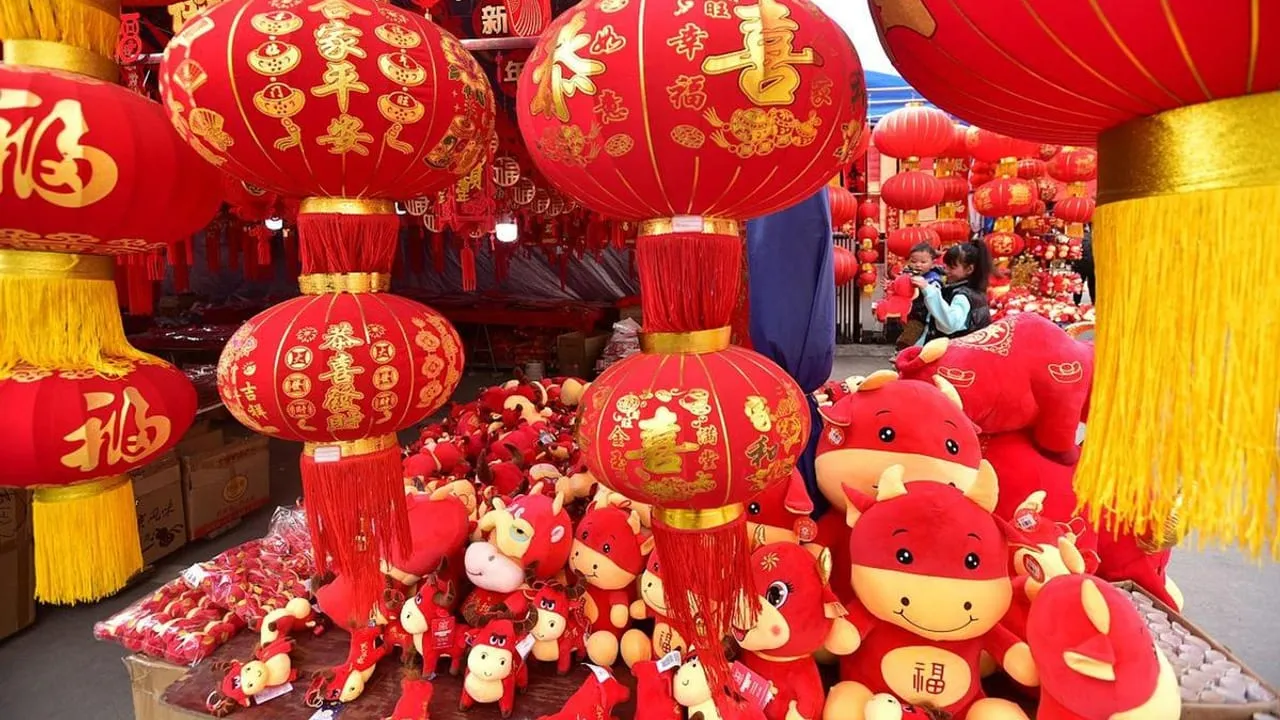
Ask when the new year falls and the answer is a date, not a month. One year it is late January, the next it is mid-February, and shopping streets fill three weeks before it. Supermarkets stack gift boxes, train tickets for the weeks around it sell out on release, and offices close in a block that shifts with the calendar each winter. Most wall calendars print the moving date beside the fixed one. Nobody finds the movement odd. It is simply how the date is counted.
That much is familiar. What is less familiar is how recent the arrangement around it is.
The usual explanation
Outside China, the date is usually filed as the moon: a festival two thousand years old, set by a calendar older than the Gregorian one, and moving because the moon does. The calendar is old, and the moon is part of it. The rest of the sentence does not survive a date check. The name, the paid day off, and the calendar the country files its paperwork under all arrive in the twentieth century.
A calendar that counts the moon and the sun
The lunisolar calendar runs on months of 29 or 30 days, twelve to a year, which gives about 354 days — roughly eleven short of the solar year. Left alone, the new year would drift into summer within a few decades. The correction is a leap month, inserted in seven of every nineteen years, and the rule for where it lands is precise: the leap month is the first month after the winter solstice that contains no major solar term.
That rule is now written into a national standard. GB/T 33661-2017, “Calculation and promulgation of the Chinese calendar,” was issued on 12 May 2017 and has been in force since 1 September 2017. It is drafted and maintained by the Purple Mountain Observatory, part of the Chinese Academy of Sciences. The effect is a date inside a fixed window: the new year falls between 21 January and 21 February. In 2026 it fell on 17 February.
The same move — a rule published by an institution rather than a custom handed down — is what a language name went through in 1955, told in why Mandarin is called Putonghua.
Two calendars in one country
The state left the old calendar in steps. On 2 January 1912 the provisional president, Sun Yat-sen, ordered the new republic to adopt the Gregorian system; a further decree on 13 January set the new year to 1 January. The old new year did not disappear, and in January 1914 the interior ministry proposed, in a report to the president, that the first day of the first lunar month be renamed Spring Festival, with several other lunar festivals renamed in the same report. The proposal was approved and took effect that year. From 1914, then, 1 January was New Year and the lunar first month was Spring Festival. The word is younger than the festival, not older.
The paid day came later still. On 23 December 1949 the Government Administration Council issued the country’s first regulation on public holidays, and the festival was on the list, at three days. That order is the origin of the modern holiday, not the moon.
The days the state wrote into the working calendar afterwards are collected under public holiday, and the block built around this festival is explained in why holidays come in week-long blocks.
From a national holiday to a world one
Its most recent layer is external. On 22 December 2023 the 78th session of the United Nations General Assembly adopted a resolution making the lunar new year a UN floating holiday — a day that staff at UN offices may take in place of a fixed one. In the UN’s own account it was the eighth holiday of that kind. On 4 December 2024, at a session held in Paraguay, UNESCO added “Spring Festival — social practices of the Chinese people in celebration of the traditional new year” to its Representative List of the Intangible Cultural Heritage of Humanity.
Neither decision changed a single calendar inside China, and neither fixed the date. What they changed is the reach of the name. When the resolution passed, China’s foreign ministry put the scale of observance at about a fifth of the world’s population and roughly 20 countries that already treat the day as a public holiday. Those figures describe an export of the festival rather than a change to how the new year is counted. The arithmetic is still done by the observatory, under the same standard, for every year ahead.
Another festival given a fixed date by a revision rather than by custom is told in why tomb-sweeping got a fixed date on the calendar.
What it is not, and what it means in February
This is not a claim that the festival was invented in 1914. The practice is far older than the name, and the name is older than the public holiday. It is not a claim about everyone: a fixed block of days off matters to a salaried worker with a travel window, and the date’s arithmetic matters to anyone booking a trip, while a household that sets its own work by the weather is less bound to either. And it is not a statement that the date is arbitrary — it follows a published rule and can be calculated years ahead.
What the rule cannot explain is the travel. New Year in most countries is a quiet day at home. Here it is followed by the largest annual movement of people anywhere, and the peak tracks the official holiday notice — the block of days, and the weekends moved to extend it — far more closely than it tracks the moon. The rule says when the festival falls. It says nothing about why half the country buys a train ticket to meet it.
For a visitor the useful habits are two. Check the year before booking, because the date moves by up to a month, and treat the block around it as set each winter by an official notice that fares and hotel rates then follow. Culture keeps the other days that were fixed this way, Spring Festival collects the pieces about the festival itself, public holiday is the tag for days written into the calendar, and the wider pattern is under habit origins.
Why it is being copied now (2026)
Spring Festival is the part of the 2026 Chinamaxxing trend that arrives on a calendar rather than on a screen. The trend — China plus the online suffix -maxxing — had carried hashtags including #Chinamaxxing and #BecomingChinese past four billion cumulative views by mid-2026, and interest in the festival’s customs is named in the coverage alongside hot water and the vacuum flask.
Its most recent layer is external, and dated. On 22 December 2023 the 78th session of the UN General Assembly adopted a resolution making the lunar new year a UN floating holiday, the eighth of its kind. On 4 December 2024, at a session held in Paraguay, UNESCO added ‘Spring Festival — social practices of the Chinese people in celebration of the traditional new year’ to its Representative List of the Intangible Cultural Heritage of Humanity.
Neither decision changed a calendar inside China, and neither fixed the date. What travels in 2026 is the name and the observance — computed by the same observatory, under the same standard, for every year ahead.
Common questions
Why does Chinese New Year change date every year?
Because it is counted on a lunisolar calendar, not a solar one: months of 29 or 30 days give about 354 days a year, and a leap month is inserted in seven of every nineteen years. The effect is a date inside a fixed window — between 21 January and 21 February. In 2026 it fell on 17 February.
Is Chinese New Year the same as Lunar New Year?
The observance is shared across the region; the name on the Chinese calendar is the one fixed in 1914. That January the interior ministry proposed renaming the first day of the first lunar month Spring Festival, and the proposal took effect that year. The word is younger than the festival, not older.
When did Chinese New Year become a public holiday?
The paid day came with the country’s first regulation on public holidays, issued by the Government Administration Council on 23 December 1949, which listed the festival at three days. The modern block around it was built by the 1999 revision, which stretched three festivals into seven-day runs by moving the weekends on either side.
Is Chinese New Year a UN holiday?
Partly. On 22 December 2023 the 78th session of the UN General Assembly adopted a resolution making the lunar new year a UN floating holiday — a day staff at UN offices may take in place of a fixed one. In the UN’s own account it was the eighth holiday of that kind. It changed nothing about how the date is counted inside China.
The documents behind this
- GB/T 33661-2017, ‘Calculation and promulgation of the Chinese calendar’, issued 12 May 2017 and in force since 1 September 2017, maintained by the Purple Mountain Observatory.
- The 1912 Gregorian adoption — the decree of 2 January 1912, and the further decree of 13 January setting the new year to 1 January.
- The 1949 regulation on public holidays, 23 December 1949, which put the festival on the list at three days.
- UN General Assembly resolution of 22 December 2023, and the UNESCO inscription of 4 December 2024.
Where this goes next
Culture keeps the other days that were fixed this way; Spring Festival collects the pieces about the festival itself, public holiday is the tag for days written into the calendar, and the trend it now travels on is filed under chinamaxxing.
The block built around this festival is explained in why holidays come in week-long blocks; another festival fixed by a revision is in why tomb-sweeping got a fixed date on the calendar; and the wider pattern is under habit origins.
Written and checked against published sources. See how we work
Keep reading
 Buys · 好物
Why the blind box became a hobby
Pop Mart opened its first store in 2010. A licence in 2016, a monster in 2019 and a resale market turned a sealed box into a collecting habit.
 Buys · 好物
Why the thermos became a personal object
Glass vacuum flasks stayed on the table for most of the century. A 1994 Chinese copy of a 1988 Japanese original is why hot water now follows you around.
 CityLife · 城市
Why one app runs the whole day
The app launched in 2011 as a messenger. Payment arrived in 2013 and mini programs in 2017; by 2024 it reported roughly 1.4 billion monthly users.