Food · 中国味
Why Chinese households keep every plastic bag
A 2007 directive priced the bag and banned the thin one. The rule explains the price; it does not explain the drawer.
The short answer
- The rule that made bags expensive is dated and specific. State Council Notice No. 72 was issued in December 2007; the ban on ultra-thin bags and the paid-bag rule both took effect on 1 June 2008.
- It worked on quantity. Reported plastic-bag use in national retail fell by about two thirds in the first year, and China cut roughly 270,000 tonnes of plastic waste.
- It did not create the drawer. Households kept a bag because a bag is a bag, and what the rule changed in 2008 was the price at the counter rather than the habit at home.
The full history, the documents behind it, and the practical reading are below.
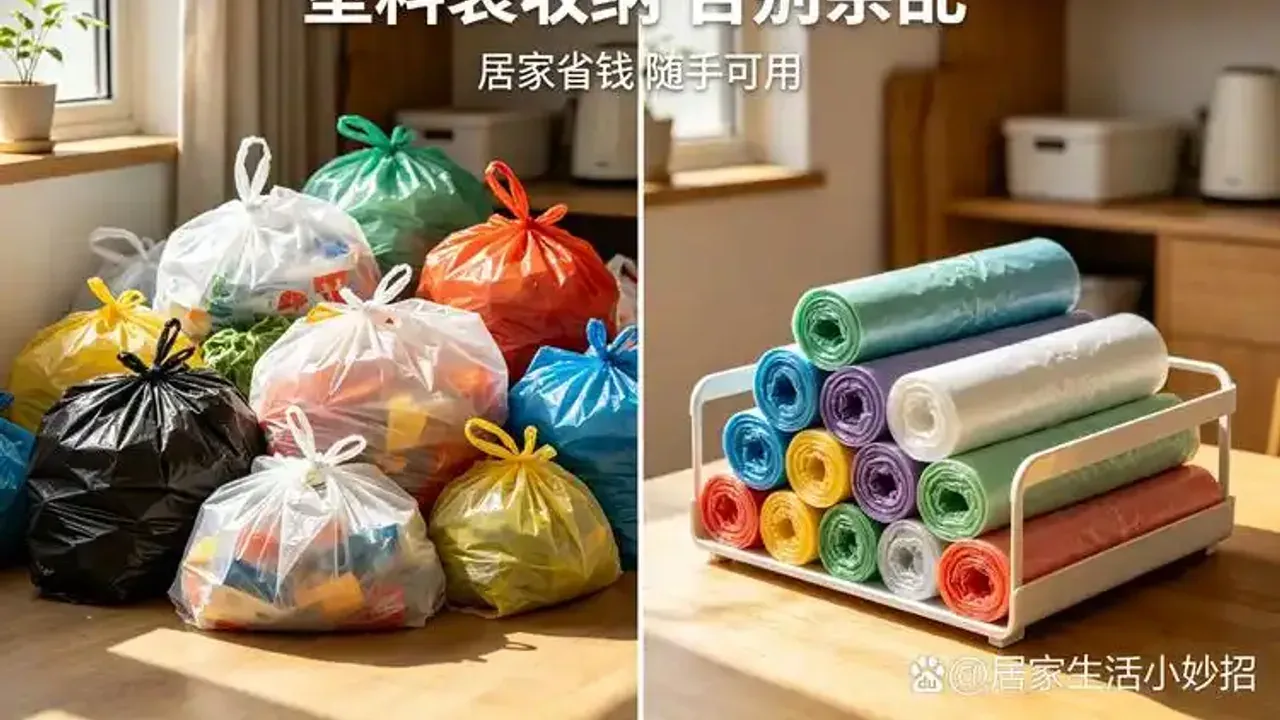
The cashier asks the question before the total leaves the screen. Whether you want a bag. It arrives folded, with a printed number on one side, and the receipt lists it as its own line — one plastic bag, counted separately from everything inside it, priced at a few cents that nobody argues about either way. Outside, a woman folds her own flat, shakes it open, folds it again, and puts it in the side pocket of her bag. At home it goes into a drawer with about forty others, none of which cost anything at the time they were acquired.
That last part is what puzzles people. The regulation is real and so is the price, and the number the government reported on it is real as well — but the drawer is also real, and no part of the rule ever touched it.
The usual explanation
Two explanations get offered, and only one of them survives a date check. The first is thrift. A bag kept in a drawer is a bag not bought, so the habit has an economic logic any shopper would recognise — and the logic cannot explain the timing, because bags were collected for decades before any rule existed. Paying for one since 2008 did not stop the collection either.
A practice that predates the price and survives it was not a response to the price, and the date the rule announced is not the date the habit arrived.
The second explanation is environmental awareness, and it is mostly backwards. The regulation of 2008 was not written about what shoppers did with bags at home. It was written for a different target: bags handed out in the millions by a retail sector that had grown around free distribution, and the single-use ones left outside with the groceries.
What the rule changed is easy to date, and it is the drawer that is hard to date. It does not need a year.
The notice that priced the bag
The measure that put a price on the bag was issued in December 2007 as Notice No. 72 from the State Council General Office, and it worked on thickness before it worked on price. From 1 June 2008, the production and sale of bags thinner than 0.025 millimetres was prohibited nationwide — the bags that tear while being carried, and that end up as litter because they are too weak to be kept. A companion measure from the Ministry of Commerce, the National Development and Reform Commission and the State Administration for Industry and Commerce, published in May 2008 as Order No. 8, set out how retail venues were to charge for bags, required them to be priced on the shelf, and required the bag to appear as a separate line on the receipt.
The reporting on the first year was specific. Reported plastic-bag use in major retail outlets fell by about two thirds, and the reduction in plastic consumption was put at around 270,000 tonnes, with a further 400,000 to 500,000 tonnes expected from other retail settings.
The rule has been tightened twice since. Opinion No. 80 of 2020 from the National Development and Reform Commission and the Ministry of Ecology and Environment extended the prohibition list, covering ultra-thin shopping bags, single-use plastic straws in the catering industry, and products containing plastic microbeads, and it set 2022 and 2025 as the dates by which further categories were to be withdrawn. The direction has not changed since, and that is unusual for a measure dealing with an object that most people had never thought about.
Why a bag gets kept
What the policy did not address, because it was never written to address it, is the drawer.
A shopping bag that has been folded flat is a container with no cost and no weight. Carrying it costs a few square centimetres in a coat pocket, and the alternative — accepting a new one at the counter — is a small, repeated decision that costs money or requires declining something. Households resolve that repeatedly, and the resolution accumulates over years into a drawer that nobody designed and nobody inspects.
The other half is that the bag is not one thing. A bag that held a single takeaway meal is thin and weak and has no second use. A bag that came home with a weekly shop is thicker, and one that survives being folded into a coat pocket through a winter is a bag with a real life ahead of it. Households mostly store the second kind and let the first kind go, which is why the drawer looks tidy and the kitchen roll holder looks bare.
The practice also has a small economy of its own. Some shopkeepers keep a box of flattened bags near the door and hand one out when a shopper arrives without one, which means the bag travels between households rather than between a shop and a bin. Nobody calls this recycling. It would not survive an accounting exercise, and the average bag does get used more than once anyway.
What survives all of this is a habit with no date at all, and that is the part worth sitting with. Nobody taught it. Nobody decided on it.
It simply had nothing pushing against it until a rule arrived that made the bag at the counter cost something, and the bag in the drawer was never part of that rule.
What it is not, and what it means if you are shopping
Three things this account is not. It is not a claim that the rule failed — the quantity reduction is one of the few policy outcomes in this area that is both large and measurable. Nor is it a description of everyone: in wet markets many sellers still hand out bags without charging, which the 2018 waste regulation in one large city asked to change. And it is not an explanation of why any particular household keeps what it keeps, which in most cases comes down to nothing more than the fact that the drawer is there and nobody has ever needed it to be empty.
The rule that says bags must be paid for is national, and it is the reason a bag appears as a line on your receipt when you pay for anything at all. The habit that puts a bag in a drawer is local, domestic and considerably older, and it exists in countries that have never legislated about plastic.
The practical part is small. If you are shopping in China, a bag costs a small amount and appears on the receipt separately, and you are not expected to decline one. If you would rather not buy a bag every trip, the pattern that works is carrying a folded one and keeping the number in a pocket, because the cashier will ask the question every time and the question is routine rather than loaded. Cash is not required for it — the same code that takes your payment takes the bag.
The wider pattern is collected under Food, the bag rule is filed under plastic bags, and the pay-to-carry question is one of the reasons why cash stopped being the default in China mattered for daily errands. The same tendency shows up in a different object in why the thermos became a personal object, where an ordinary container turned into a personal item and stayed one.
Why it is being copied now (2026)
The bag is not part of the Chinamaxxing trend that overseas creators have been copying since 2025, and the reason is worth stating plainly.
That trend runs on behaviours a person can adopt the same day: drink hot water, carry a vacuum flask, soak your feet, practise baduanjin in a park. Reusing a plastic bag is not on that list, because it is a habit rather than a purchase, and it produces nothing worth filming.
What travels instead is the rule. People coming back from China tend to describe the same small discovery — that the bag on the counter has a price, and that the receipt lists it separately, which works as a compressed piece of information about how a country governs ordinary consumption. That is why it recurs in first-hand accounts rather than in listicles, and why the number attached to it, a two-thirds fall in reported bag use, gets repeated: it is both surprising and short.
Common questions
Why do Chinese people keep plastic bags at home?
Because a bag is a container, and a free one that costs nothing to reuse. The 2007 directive and the June 2008 rules changed the price at the counter, not the habit at home: retail bag use fell by about two thirds while household storage continued, which is the clearest sign that the two things are separate.
Are plastic bags free in China?
No. Notice No. 72 of December 2007 required paid bags in retail venues from 1 June 2008, and Order No. 8 of 2008 required the price to be marked and the bag to be listed as its own line on the receipt. Wet markets are the loose spot, and a 2018 municipal waste regulation there asked for enforcement.
Are the thin plastic bags banned?
Yes. Bags thinner than 0.025 millimetres were prohibited nationwide from 1 June 2008 because they tear in use and end up as litter. Opinion No. 80 of January 2020 widened the prohibition list to single-use straws in catering and products containing plastic microbeads, with 2022 and 2025 set as further deadlines.
Do Chinese households actually reuse them?
Most of the ones worth reusing, and the practice is selective. A bag that carried a single hot meal is too thin to keep; a bag that came home with a weekly shop is thick enough to survive a pocket through winter. Households generally store the second kind, which is why the drawer looks tidy while the kitchen roll holder stays bare.
Is this about saving money?
Partly, but timing rules out money as the explanation. Bags were collected for decades before any rule existed, and the collection continued unchanged once bags started costing money — which means the drawer was not created by the price and was not stopped by it either.
The documents behind this
- Notice No. 72 of the State Council General Office, issued December 2007, banning production and sale of bags thinner than 0.025 mm and requiring paid bags in retail venues from 1 June 2008.
- Order No. 8 of 2008 from the Ministry of Commerce, the National Development and Reform Commission and the State Administration for Industry and Commerce, published 15 May 2008 and in force on 1 June 2008, setting out pricing, labelling and receipt requirements for paid bags.
- Opinion No. 80 of 2020 from the National Development and Reform Commission and the Ministry of Ecology and Environment, issued 16 January 2020, extending the prohibition list and setting 2022 and 2025 deadlines.
- National Development and Reform Commission reporting on the first year of the rule, which put the reduction in retail bag use at about two thirds and the cut in plastic consumption at roughly 270,000 tonnes.
Where this goes next
The Food section covers how meals are ordered, shared and timed, and the same bag shows up at the table in why you order by scanning the table. The regulation is filed under plastic bags and grocery bags, the general pattern of the rule under habit origins, and the containers that travel with people under household objects.
For the wider reason a habit like this outlives a rule that never touched it, read why these habits look older than they are; for the other side of the counter, why cash stopped being the default in China covers what replaced coins and notes at the till.
Written and checked against published sources. See how we work
Keep reading
 Buys · 好物
Why the thermos became a personal object
Glass vacuum flasks stayed on the table for most of the century. A 1994 Chinese copy of a 1988 Japanese original is why hot water now follows you around.
 Food · 中国味
Why one finger measures the water in rice
Measuring rice water with a finger worked because early rice cookers had no water line. Marks arrived with mass production, and the habit stayed as a fallback.
 CityLife · 城市
Why China has a scrubbing service
Scrubbing came out of state-run workplace baths in the north, spread as Hong Kong sauna culture arrived in the 1990s, and was regulated in 2010.